
Fire Prevention at Home and the Role of Homeowners Insurance
A home fire can disrupt daily life in a matter of minutes, but many common fire hazards can be reduced through routine maintenance and household habits. Fire prevention also provides a useful reason to review homeowners insurance. Safety measures can help lower the chance of a loss, while insurance may help address certain financial consequences if a covered fire damages the home or belongings.
Homeowners insurance is not a substitute for fire safety, and fire safety does not make insurance unnecessary. Both matter. A practical home safety plan combines prevention, a clear escape plan, and an understanding of the coverage already in place.
Common Sources of House Fires
Cooking equipment is a frequent source of residential fires. Unattended cooking, grease left heating on a stovetop, and flammable items kept too close to burners can quickly create a dangerous situation. Staying in the kitchen while food is cooking and keeping towels, paper products, and packaging away from heat sources are simple habits that may reduce risk.
Heating equipment also deserves attention, particularly during colder months. Space heaters need open space around them and should be kept away from bedding, curtains, furniture, clothing, and other materials that can burn. A space heater placed too close to a couch, for example, may create a serious hazard even when it is working as intended.
Electrical problems can develop gradually. Older wiring, damaged cords, overloaded outlets, and extension cords used as long-term wiring solutions may raise the risk of overheating. Holiday lights and high-wattage appliances can add to the load on a circuit. If lights flicker, outlets feel warm, breakers trip repeatedly, or cords show damage, those warning signs merit attention from a qualified electrician.
Candles are another preventable concern. A candle should be placed on a stable, heat-resistant surface, kept away from items that can catch fire, and extinguished before anyone leaves the room or goes to sleep. Battery-operated alternatives may be worth considering in homes with young children, pets, or busy shared spaces.
Build Fire Safety Habits Into Your Household Routine
Fire safety is most useful when every member of the household understands what to do before an emergency happens. An annual review can bring attention to equipment that needs maintenance and plans that may have become outdated as children grow, rooms change use, or family members move in or out.
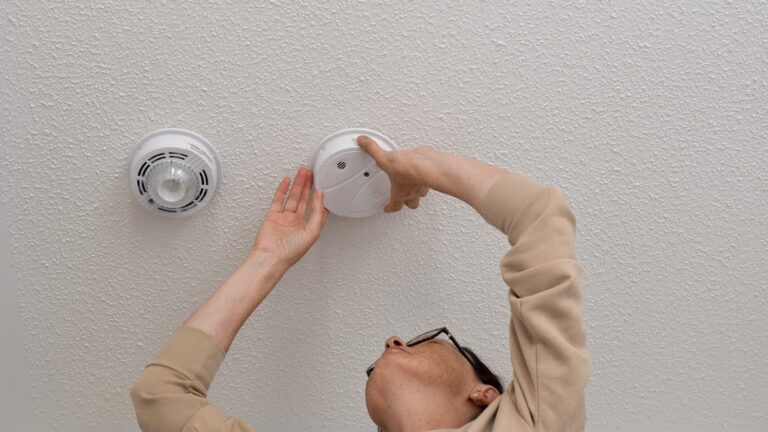
- Test smoke alarms regularly. Smoke alarms can provide an early warning when seconds matter. Check alarms in bedrooms, hallways, and shared living areas, and replace batteries or alarm units according to the manufacturer’s instructions.
- Practice an escape plan. Each person should know two possible ways out of each room when practical. Decide on a meeting place outside so household members can quickly account for one another after leaving the home.
- Keep an appropriate fire extinguisher available. A kitchen extinguisher can be helpful for a small, manageable fire, but household members should understand its instructions in advance. If a fire is growing, producing heavy smoke, or blocking an exit, leaving the home and calling emergency services is generally the safer response.
- Maintain vents and chimneys. Lint buildup in dryer vents and creosote buildup in chimneys can create fire hazards. Regular cleaning and inspection can help reduce that buildup.
- Use outlets carefully. Avoid plugging too many devices into one outlet or extension cord. Pay close attention to space heaters, power strips, and seasonal lighting, which can place added demand on electrical systems.
These steps are not complicated, but their value comes from consistency. Testing an alarm once is helpful; making testing part of an ongoing household routine is more likely to reveal a dead battery, a missing unit, or an alarm that no longer works properly.
How Homeowners Insurance May Respond After a Fire
A standard homeowners policy commonly includes several coverage sections that may apply after a fire, subject to the policy’s terms, exclusions, deductible, and limits. The declarations page is a helpful starting point because it summarizes the coverages and limits selected for the policy.
Coverage for the home itself
Dwelling coverage is the part of a homeowners policy that may help pay to repair or rebuild the main residence after covered damage. The amount should reflect the cost to rebuild the structure, which is not necessarily the same as its market value or purchase price. Building materials, labor costs, the home’s design, and local rebuilding conditions can affect that amount.
Coverage for belongings
Personal property coverage may help with damaged possessions such as furniture, clothing, appliances, and household items. After a fire, it can be difficult to remember every item that was in a closet, cabinet, garage, or storage area. A home inventory can make this process easier. Photos or video of each room, along with receipts or records for significant purchases, can provide useful documentation.
Coverage for detached structures
Other structures coverage may apply to buildings and features that are separate from the main home, such as a detached garage, shed, fence, or gazebo. This coverage often has its own limit, so it is useful to consider any separate structures on the property when reviewing the policy.
Help with temporary living costs
If a covered loss makes the home unfit to live in while repairs are underway, additional living expense coverage may help with certain increased costs of maintaining a temporary household. Depending on the policy, that may include items such as temporary lodging or other necessary expenses that exceed normal living costs. The applicable policy language determines what expenses qualify and how long this coverage may be available.
Replacement Cost and Actual Cash Value Are Not the Same
How a policy values damaged property can affect what a household receives after a covered loss. Two terms often appear in policy discussions: replacement cost and actual cash value.
Replacement cost generally refers to the cost of replacing an item with a comparable new item or rebuilding damaged property using current costs, without subtracting depreciation in the same manner as actual cash value. Actual cash value generally reflects an item’s value after age, wear, and depreciation are considered. A television that is several years old, for instance, may have a lower actual cash value than the cost of buying a new comparable television.
Policies can apply these valuation methods differently to the home and its contents. Some policies also include conditions that affect when replacement-cost amounts are available. Reviewing the policy before a loss can help set more realistic expectations and identify questions worth raising during a coverage review.
Changes to Your Home Can Change Your Coverage Needs
Insurance reviews are especially useful after major changes. A renovation, finished basement, room addition, or upgraded kitchen may affect rebuilding costs. A new home office may add computers, equipment, furniture, or inventory that was not present when the policy began. Even without a renovation, a household can accumulate belongings over time that would be costly to replace after a major loss.
Some categories of property may have special limits under a standard homeowners policy. Jewelry, fine art, collectibles, musical instruments, and similar high-value items may need closer attention. In some situations, scheduling an item or adding separate coverage may provide a clearer way to address property with values beyond standard limits. The right approach depends on the item, its value, how it is used, and the available policy options.
It is also important to consider the deductible, which is the amount the policyholder generally pays toward a covered loss before insurance payments begin. A deductible affects out-of-pocket responsibility, so it should be understood alongside the policy’s limits and valuation methods.
Use Fire Prevention as an Annual Insurance Review Reminder
Testing alarms, clearing vents, and discussing escape routes are worthwhile annual tasks. Adding a homeowners policy review to that routine can help a household spot outdated information before a loss occurs. Review the dwelling amount, personal property coverage, detached structures, deductible, and any valuable items that may need separate consideration. Keep policy documents and a home inventory in a secure place that can be accessed if the home is damaged.
Fire prevention and a current insurance review can help households prepare for both the immediate safety concerns and the financial questions that may follow a serious loss. For help understanding homeowners coverage options and reviewing how a policy may respond to fire damage, contact The Southern Agency.