
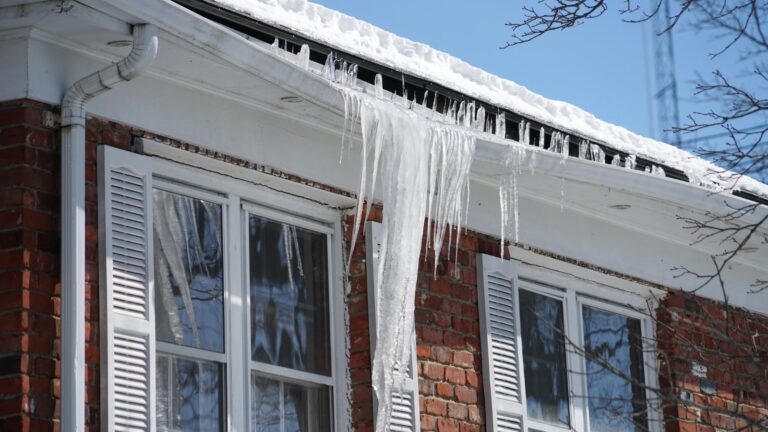
A Homeowner’s Guide to Managing Ice Dams
Ice dams can develop when rooftop snow melts and freezes again at the eaves, forming a barrier that obstructs drainage. This blockage can cause water to seep under shingles, leading to potential damage to ceilings, walls, and possessions. Let’s explore why ice dams form and how to address them effectively.
Understanding Ice Dams
Ice dams are often due to varying roof temperatures. Warm air from the attic heats the upper part of the roof, while the eaves remain cold. This mix — combined with snow and prolonged cold weather — sets up a challenging situation for homeowners.
Immediate Actions for Suspected Ice Dams
If you think an ice dam might be forming, act quickly to limit any potential damage. Follow these steps to safeguard your home until professional help is available:
- Safety: Avoid climbing onto the roof in winter conditions. If you see large icicles or notice water spots, focus on protection rather than climbing.
- Documentation: Photograph roof edges, interior water stains, and damaged items to have essential records for claims and repairs.
- Containment: Use buckets and towels to catch leaks and move items away from affected areas to prevent further exposure.
- Humidity Control: Run exhaust fans and use dehumidifiers to reduce moisture, which can help prevent further issues.
- Snow Clearing: Use a roof rake safely from the ground to remove snow from roof edges, reducing further melting and ice formation. Avoid using sharp tools.
- Professional Help: Reach out to a roofer skilled in handling ice dams safely to resolve the issue effectively.
Insurance Considerations
Home insurance often covers unforeseen water damage, but coverage can depend on the cause and maintenance history. Claims might be denied if issues persist due to negligence. Options like policy endorsements can address various scenarios, such as backups or seepage.
Factors affecting premiums after an ice dam incident include:
- Previous claims linked to water damage
- The current condition and age of the roof
- Quality of attic insulation and ventilation
- Location and typical weather conditions
- Steps taken to prevent recurrence
Preventing Ice Dams for Future Seasons
Long-term solutions focus on maintaining consistent roof temperatures and reducing attic heat loss. Consider the following tips:
- Seal areas where warm air might escape into the attic, such as around light fixtures and plumbing.
- Enhance insulation to minimize heat transfer to the roof.
- Improve attic ventilation to help the roof stay in line with outside temperatures.
- Ensure gutters are clean before winter to avoid drainage problems that exacerbate refreezing.
Residents in snowy regions should review their homeowner’s policies before the next storm. Contact The Southern Agency to discuss potential coverage gaps and suitable options for your home. Review your policy with us today.
Need help assessing your insurance needs? Get Started Today with The Southern Agency to chat with our team about protection plans that fit your situation.