Search The Site
Try a different word, or check the spelling.
Auto Insurance
Choose protection for your car and your everyday driving, with guidance from The Southern Agency.
- In short
- Generally, liability responds to harm you cause others and physical damage to your own car, each with its own limits and terms.
- Who or what is protected
- You, listed drivers, and, within policy terms, people injured or property damaged by your covered vehicle.
- Where it stops
- Wear, mechanical breakdown, most business or delivery use, and anything above the limits you choose.
Two halves of one policy
Most auto coverage decisions fall on one side of this line. Names, availability, and terms vary by carrier and state.
Protects other people
- Bodily injury liability
- Injuries you are legally responsible for, up to per-person and per-accident limits. Many policies also provide a legal defense; whether defense costs reduce your limit depends on the policy.
- Property damage liability
- Damage you cause to other vehicles, fences, buildings, and other property.
Protects you and your car
- Collision
- Damage to your vehicle from hitting another vehicle or object, subject to your deductible and policy terms.
- Comprehensive (other than collision)
- Commonly theft, vandalism, fire, falling objects, animal strikes, and weather such as hail, subject to exclusions.
- Uninsured / underinsured motorist
- Where offered or required, may respond to your injuries, and sometimes your vehicle, when the at-fault driver has no or too little insurance, subject to policy terms.
- Medical payments or PIP
- Covered medical expenses for you and passengers, regardless of fault, up to the limit chosen; PIP may also include lost wages. Which one is offered, and whether it is required, varies by state.
Liability versus physical damage
People often say “full coverage” when they mean liability plus collision and comprehensive. No policy covers everything.
| Liability | Collision and comprehensive | |
|---|---|---|
| Who is paid | The people you injure and the owners of property you damage | You (or your lender) for your own vehicle |
| Required? | Most states require minimum liability coverage or other proof of financial responsibility; rules and exceptions vary | Not by state law, but commonly required by a lender or lessor |
| Deductible | Usually none | You choose one; it is subtracted from each covered claim |
| How much | Limits you select; minimums can be exhausted by one serious injury | Generally up to the vehicle’s actual cash value, unless an endorsement says otherwise |
Scroll sideways to compare all columns.
Other options to ask about
Availability and names differ by carrier and state. Treat these as questions, not a menu.
- Rental reimbursement
- Helps pay for a rental while your car is repaired after a covered loss.
- Roadside or towing
- Towing and labor costs, usually with a per-event limit.
- Loan or lease gap
- The difference between actual cash value and what you still owe, on a total loss.
- Rideshare endorsement
- Fills some of the gap while you are logged in to a transportation network app. Delivery work is often treated differently.
- Higher liability limits or an umbrella
- Extra protection above your auto limits for serious injury claims.
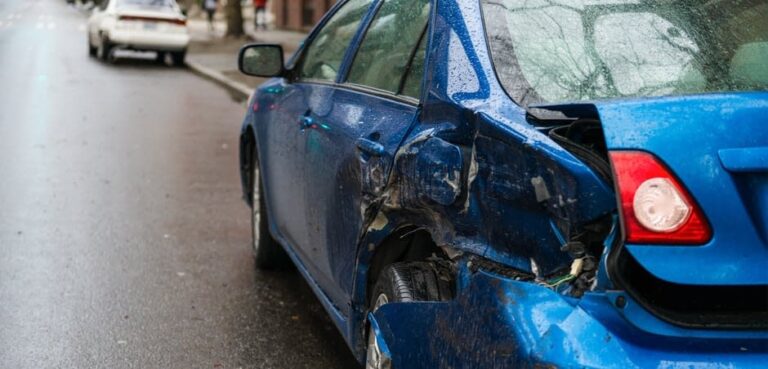
A rear-end collision on a wet road
Hypothetical and for illustration. Whether a real loss is covered depends on the facts and the policy.
- What happens
You slide into the car ahead at a light. The other driver goes to urgent care and their bumper needs replacing. Your hood and radiator are damaged.
- Which part is relevant
Bodily injury and property damage liability respond to the other driver’s injuries and car. Collision responds to your car, after your deductible.
- What could change the outcome
- Whether your liability limits cover the other driver’s full medical bills
- Whether you carry collision on this vehicle at all
- Who was driving and whether they are listed or permitted
- Whether the car was being used for paid delivery at the time
Check your state’s requirements
Your state insurance department publishes consumer guides and minimum requirements.
What an agent can do
This information is educational, not an offer of coverage.
Start by asking which options are available for your situation. An agent can explain policy wording and help you weigh limits and deductibles. Coverage, price, and eligibility depend on the insurer, your details, and your state.
Questions people ask
Is auto insurance required by law?
Most states require drivers to carry at least minimum liability coverage or show other proof of financial responsibility. Required amounts, and exceptions, differ by state and change over time, so confirm current requirements with your state before relying on them. A legal minimum is a floor, not a recommendation.
What affects my auto premium?
Carriers weigh many factors, which can include your prior insurance history, the coverages and limits you choose, business use, driving record, the year, make, and model of each vehicle, commute distance, prior claims, where the vehicle is garaged, marital status, credit-based insurance score where permitted, and age. Each carrier weighs these differently, which is one reason quotes vary.
Where does my insurer get underwriting information?
Common sources include your state’s motor vehicle records and consumer reporting agencies such as LexisNexis, Experian, Equifax, and TransUnion, which supply claims history and credit-based information where its use is allowed.
Does my credit affect my auto insurance?
In many states, carriers may use a credit-based insurance score as one rating factor; some states restrict or prohibit it. Insurers that use it say it correlates with claim frequency. It affects price, not what the policy covers.
How can I lower my auto premium?
Common levers include keeping a clean driving record, choosing a higher deductible you can afford, combining policies with one carrier, and asking which discounts you may qualify for, such as multi-car or good student. Discounts and their size vary by carrier and state.
Does my auto policy cover rental cars?
Often, within limits. Your liability coverage commonly extends to a rental, and physical damage coverage on your own vehicles may extend to it too. It depends on where you drive (foreign countries are often excluded), whether you carry collision and comprehensive, who is driving, and the policy wording. Ask your agent before you decline the rental counter’s coverage.
Can I use my car for ridesharing or delivery?
Many personal auto policies exclude or limit coverage while a vehicle is used to carry people or goods for a fee. Depending on your carrier and state, a rideshare endorsement or a commercial auto policy may close part of that gap. Talk with your agent before you start driving for an app-based service.
Can I buy a “full coverage” auto policy?
No. “Full coverage” is shorthand, usually for liability plus collision and comprehensive. Every policy still has limits, deductibles, and exclusions; wear and tear and mechanical breakdown, for example, are not covered.
When could my auto rate change?
Rates are usually set for a policy term and can change at renewal, up or down, as carriers revise rates and your own information changes. A mid-term change, such as adding a driver or vehicle, can also change the premium. Your agent can review your premium at renewal.
When should I review my auto policy?
At least once a year, and whenever something changes: a new driver, a new vehicle, a move, a paid-off loan, or a new way of using the car.
Talk through auto insurance with an agent
Bring your questions and the list above. We will explain the options and the wording in plain language.