Skip to content

Janitorial Service Insurance

A client handing you keys is trusting your crew with access, not just a cleaning task. Theft allegations and lost-key costs need different insurance consideration.

The Southern Agency can help you match your cleaning operations and client site access to appropriate liability and property coverage.

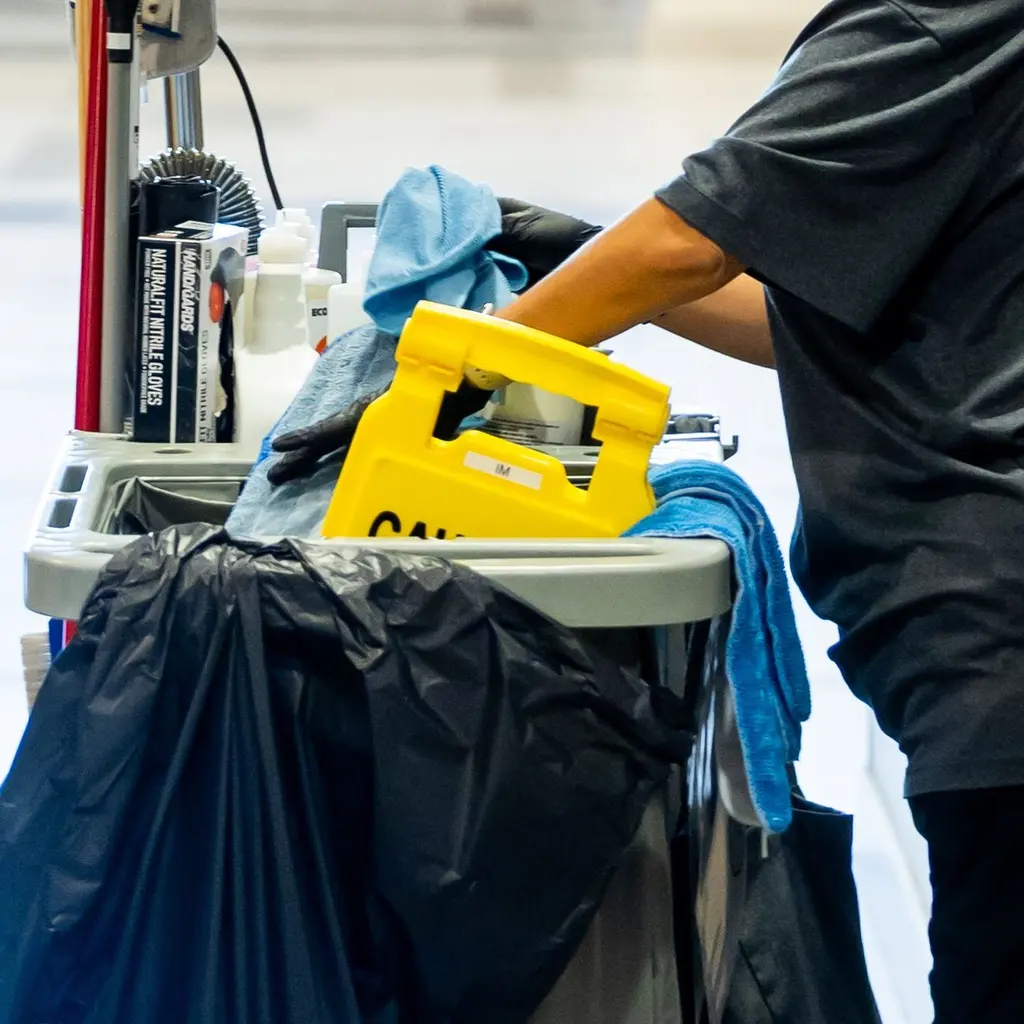
Gloved hands handling cloths and cleaning supplies on a janitorial cart.

Industry overview

You clean offices and facilities using various equipment and products, which can lead to property damage or injury claims if a floor is left slippery or equipment malfunctions. Your staff's access to secure areas and keys can also raise theft allegations if items go missing.

The Southern Agency can help you review cleaning tasks, machines and client access against your insurance. We can separate liability for cleaning damage from client-theft protection and any lost-key extension.

Risks worth discussing

Damage to client property

Floor machines, products or handling can damage flooring, furniture, electronics, and finishes. Identify the item being cleaned or held, resulting damage elsewhere, the product, and actual task. A claim for damaged equipment differs from redoing cleaning, replacing every treated surface or fulfilling a satisfaction guarantee.

Slip-and-fall from wet floors

An occupant or visitor may allege that mopping or stripping left a hazardous surface. Identify the task, condition, access, timing, and actual inspection or warning arrangements. Liability for a client's injured employee and work-injury benefits for the cleaner's own crew need different parties and terms checked.

Theft allegations during after-hours access

A client may report missing cash or property after a shift. Determine what was lost, who had access and what the evidence shows, without treating an accusation as employee guilt. Crime and janitorial fidelity terms can differ in whose property and which people are covered. Check who may claim and the required proof, including any conviction condition.

Chemical exposure and worker injury

Cleaning products can cause contact injuries, and lifting, machine work, ladders, and wet floors can involve strains or falls. Describe tasks, sites, employers, and worker roles, including part-time and outside crews. A part-time schedule or contractor label does not settle legal status, applicable duties, or injury benefits.

Lost keys and access compromise

A missing key or access device may prompt a request for new keys, rekeying, or other response. Identify custody, actual loss, authorization, and the remedy sought. Lost-key or lock-replacement terms need separate review; a theft bond, general liability title or duty to return keys does not establish all physical or electronic access costs are included.

Contractual insurance requirements

Read actual requests for limits, additional-insured parties, waivers, certificates, and any crime or bond instrument before committing. Compare requested work, timing and parties with policies and endorsements. A signed cleaning agreement or client approval does not amend coverage or prove every indemnity or promised remedy is insured.

Coverage worth discussing

Policies to ask about. Which ones fit depends on your operations, your contracts, and the carrier’s forms.

Situations to think through

These hypothetical examples are not agency claim results. Whether a loss is covered depends on the facts, policy terms, and applicable exclusions.

  1. Hypothetical: Damaged office electronics

    Hypothetical: a crew member knocks over a client's computer while cleaning, damaging it. Applicable GL may help pay included defense and covered property-damage liability. Identify what was being cleaned or held, actual damage, duties, and accepted operation, with relevant exclusions and limits. A cleaning contract or repair invoice does not prove every handled item, data loss, or replacement amount is included.

  2. Hypothetical: Theft accusation after a night shift

    Hypothetical: a client reports cash missing after an overnight cleaning shift. Applicable client-property crime terms or a suitable janitorial fidelity bond may pay an included, proved employee-theft loss. Check the person, property, claimant, evidence, any conviction condition, limits, and discovery or notice requirements. The timing of a complaint is not proof of theft, guilt, or an automatic bond payment.

  3. Hypothetical: Fall on a freshly mopped floor

    Hypothetical: a client's employee who stayed late slips on a freshly mopped floor and is injured. Applicable GL may help pay included defense and covered third-party injury liability. Check the actual task, condition, notice, responsibility, insured parties, and terms. An injury on the client's site does not settle every participant's liability, and an injury to the cleaning firm's own worker needs separate work-injury review.

Before you talk to an agent

What to have ready

Tick items as you gather them. Nothing here is saved or sent.

Questions to raise

  • Describe after-hours access, keys, codes, secure rooms, and property or cash encountered, with actual employees, owners, and outside crews. Compare crime and any requested janitorial fidelity instrument by included people, client, or business property, who may claim, proof, and limits. Check any conviction requirement in the actual bond; neither access nor an accusation establishes payment.
  • Compare client limit requests with possible injury or property damage in the facilities cleaned and the coverage that would apply. Identify site types, products, machines, held, or treated property, and completed-work terms. If an umbrella is requested, check its actual underlying policies, required limits, and layer conditions. More limits or a certificate minimum do not establish every treated surface, cleaning guarantee, theft, or rekey remedy is insured.
  • Read actual additional-insured, waiver, ongoing or completed-work, crime, and bond requests against the policies and endorsements before committing. Separate the client's interests from the cleaner's own duties and actual provider responsibilities. Private contract conditions are not automatically legal mandates or insurer promises, and a certificate does not amend the policy.
  • List floor machines, vacuums, supplies, and rented or borrowed items by owner, value, location, and transport or storage arrangements. Compare theft and damage conditions, vehicle storage and client-site property terms. Check whether items must be listed individually or fit a broader equipment limit. Review wear, breakdown, stock, operating liability, and business interruption separately rather than assuming they follow an equipment schedule.

Contract terms to check

  • Define tasks, products, surfaces, rooms, and items to be cleaned or excluded, who authorizes changes and how existing damage, completion and complaints are recorded. Allocate access and warning or handoff responsibilities while clients remain on site. Compare resulting damage with treated or held property, redoing work and satisfaction promises; client authorization does not insure every remedy.
  • Specify key and access-device custody, authorized people, secure areas, return, incident reporting, and responsibility for rekeying or other response. Compare requested physical-key or electronic-access remedies with the actual extension. A theft bond or duty to return a key does not establish every replacement, lock, code, or system cost is covered.
  • If a client requests crime, fidelity or a janitorial bond, identify the actual instrument, insured people, client-property interest, and who may claim. Compare proof, any conviction requirement, limits, and notice with the request. Neither a bonded label nor an accusation proves a payable employee-theft loss, and one instrument need not cover theft from both client and cleaner.
  • Identify actual employers, outside cleaning firms, scope, supervision, qualifications, and insurance, with reporting and damage responsibilities. Compare their terms and any requested protection with the cleaner's own policy. A provider certificate or absence of insurance does not automatically transfer every liability or cover every employee or contractor act.
  • Compare actual client requests for limits, additional-insured parties, waivers, and ongoing or completed-work terms with endorsements before committing; review relevant lease, rental or finance interests separately. Keep legal obligations, private conditions, and insurer promises distinct. A certificate does not amend coverage, guarantee availability, or prove every indemnity and loss is accepted.

What the agent conversation looks like

Start with the work you do and the questions your current policies leave unanswered. Carrier options depend on your location, risk, and underwriting. Explore our approach.

  1. ListenReview your operations, current coverage, and past claims.
  2. AssessIdentify potential hazards and discuss ways to reduce risk.
  3. BuildDiscuss policy and carrier options, premium costs, and audits.
  4. SupportReview changes and help you plan ahead as your needs develop.

Questions owners ask

Why do janitorial clients ask for a bond?

A client may request a particular instrument for employee theft from its premises. Compare the janitorial fidelity bond or crime terms, included people and property, who may claim, limits, and required proof, including any conviction condition. Owners, outside crews and theft from the cleaner itself may be treated differently. Access or a missing-property accusation is not automatic payment.

What if my crew damages a client's property?

Applicable GL may help pay included defense and covered resulting property-damage liability. Identify the actual cleaning task, product, item worked on, or held and damage elsewhere, with timing, exclusions and limits. Redoing cleaning, replacing every treated item, lost data and a satisfaction or repair promise are not automatically the same covered loss.

Do part-time cleaners need workers' compensation?

Identify the actual employer, worker status, work state, payroll, and duties, including products, machines, lifting, and ladders. Applicable workers compensation may help pay qualifying work-injury benefits under the actual rules and policy. A part-time shift, small headcount, or outside-contractor label does not settle every obligation or benefit.

Can you meet my client's certificate of insurance requirements?

Review the actual agreement, work, requested parties, limits, additional-insured status, waivers, and any crime or bond instrument. Compare these with policies, endorsements, and insurer requirements before committing. A certificate or client request does not establish availability or insurer agreement to every term, and it does not amend coverage.

Is my cleaning equipment covered off-site?

Applicable inland marine may help repair or replace included floor machines, vacuums, and gear after covered loss at jobs, in transit or in storage. Check ownership, rentals, values, locations, scheduled or broader limits, and theft or damage conditions. Vehicle damage, stock, operating liability, wear, breakdown, and every missing item need separate review.

Talk through your janitorial service coverage

Bring your questions, current policies, and relevant contracts. An agent can review coverage terms, exclusions, and the information carriers ask for, then explain the options available to you.

How can we help you get started?

Choose the quote that fits, and we’ll take it from there.

Have a question? Contact us