Skip to content

T-Shirt Production Facility Insurance

Your branded blanks and decorated event orders can have different values and resale limits if a job is canceled. Stock and entrusted-goods terms should identify those interests, separately from a dryer repair, reprint, or promise to meet the event date.

The Southern Agency can help you align your insurance with the production and liability risks of a T-shirt printing business.

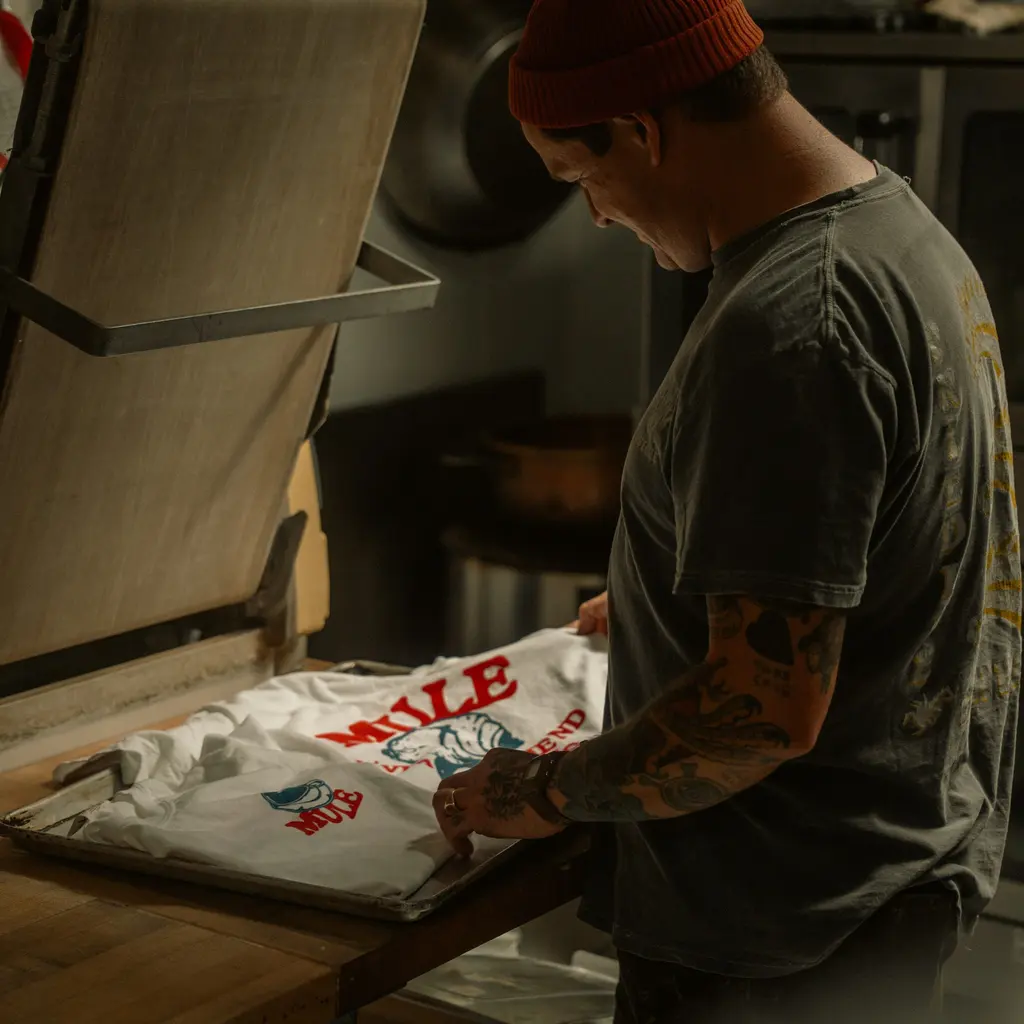
A worker finishing a printed T-shirt at a workshop press.

Industry overview

You decorate apparel using printing processes and heat curing, working with various inks and solvents. A dryer failure can halt an event-driven order, while artwork or chemical reactions can lead to liability concerns.

The Southern Agency can review your printing processes, ink formulations, and order fulfillment cycles to help you select appropriate insurance. For example, we can clarify how your coverage for a dryer repair differs from the potential liability for a trademark dispute over a design.

Risks worth discussing

Ink, solvent, and chemical fire hazard

Dryers and heat presses bring ignition and burn hazards near apparel and chemical storage. Assess the ink and cleaner ingredients, quantities, and waste routes. Formulations and processing conditions determine the fire and pollution questions; printing methods alone do not answer them.

Dryer and press breakdown

A conveyor dryer, press or DTG printer may be the bottleneck for several event orders. Identify the internal damage and repair needed, then separate worn parts, bad settings, and the customer’s delay demand.

Misprints and unsellable goods

Wrong colors, placement, or sizes can require new blanks and another print run. Who owns the shirts and whether there is insured damage, an error claim or only a refund demand affect which terms to examine.

Artwork and trademark exposure

A customer may supply a logo without the right to reproduce it, or a license may restrict the goods or use. Obtain the artwork permissions and examine the alleged right; GL advertising-injury wording neither supplies a license nor settles trademark defense.

Inventory and blanks fire load

Value blank shirts, work in process, and finished decorated orders at peak concentrations. Customer-owned blanks and stock restricted by branding or cancellation terms need their owners and valuation identified.

Worker chemical and burn injuries

Operators face dryer and press burns, moving machinery, repetitive work, and contact with the chemicals actually used. Include cleaning and screen-reclaiming duties when describing staffing and employee benefits.

Situations to think through

These hypothetical examples are not agency claim results. Whether a loss is covered depends on the facts, policy terms, and applicable exclusions.

  1. Hypothetical: Ink-room fire

    A fire near stored solvents and inks damages presses and blank and finished shirts. Commercial property may address insured equipment and stock repair or replacement. If customer blanks are damaged, their ownership, value, and processing protection matter. Purchased income coverage depends on its cause and time terms; buyer refunds and event penalties remain separate expenses.

  2. Hypothetical: Dryer breakdown before an event

    A conveyor dryer fails before a large event order, leaving shirts uncured and the line idle. Equipment breakdown may address eligible internal damage, and purchased income or extra expense may address the insured interruption. Worn parts, the cost of a bad print run and a buyer’s missed-event demand are separate from covered repair and income.

  3. Hypothetical: Design infringement allegation

    A rights holder alleges that a design printed on shirts infringed its trademark, although the customer supplied the file. Specialist media or IP protection, if offered for that reproduction work and right, may address covered defense or damages. Ordinary GL advertising injury does not establish cover for a mark on merchandise, and neither a customer approval nor insurance grants reproduction rights.

Before you talk to an agent

What to have ready

Tick items as you gather them. Nothing here is saved or sent.

Questions to raise

  • Separate wearer injury from a wrong-color run, buyer refund, and infringement allegation. Each has a different loss and coverage question.
  • Use actual ink and cleaner safety data, storage quantities, and curing arrangements when assessing fire; trace screen-rinse and chemical waste separately for pollution terms.
  • Identify owned and customer-supplied blanks and their peak values during storage, printing, and curing. Ask whether entrusted-property terms insure direct damage or only legal liability and what processing restrictions apply.
  • For a misprint, examine any printers E&O and optional correction-of-work protection offered for apparel printing. Coverage for a customer’s financial claim and paying to redo your own work are separate grants.
  • Estimate dryer or press repair time, alternate printing capacity, and the income at risk. Compare purchased waiting and restoration terms with event dates and the buyer’s actual limits and endorsements.

Contract terms to check

  • Record who owns the blanks, supplies the design, and secures reproduction rights, approves proofs and bears loss during printing, curing, outside decoration, and delivery. A proof approval does not establish the customer’s right to license someone else’s mark.
  • Compare any offered printers E&O or correction-of-work terms with misprints, new blanks, reruns, refunds, and customer financial claims. Examine IP terms separately for apparel reproduction and the alleged right. Check the coverage trigger and, if a proposed form is claims-made, its prior-acts and reporting conditions; a generic professional policy does not establish printer or trademark acceptance.
  • Compare event and brand buyer requests, additional-insured endorsements, limits, indemnities, and financed-equipment interests with issued terms. Certificates do not amend insurance. Delivery penalties, withdrawal, expedited reruns and a promised event date are not established benefits of a property, product, or breakdown label.

What the agent conversation looks like

Start with the work you do and the questions your current policies leave unanswered. Carrier options depend on your location, risk, and underwriting. Explore our approach.

  1. ListenReview your operations, current coverage, and past claims.
  2. AssessIdentify potential hazards and discuss ways to reduce risk.
  3. BuildDiscuss policy and carrier options, premium costs, and audits.
  4. SupportReview changes and help you plan ahead as your needs develop.

Questions owners ask

Are inks and solvents a fire concern for coverage?

Dryer and press heat and the stored chemicals need assessment. Bring product safety data and quantities for the inks, emulsions, pretreatments, and cleaners used. Fire properties depend on the formulation and process. Property fire damage and pollution cleanup have different triggers, and routine waste treatment is not an insured loss merely because chemicals are handled.

What if a printed design infringes a trademark?

A customer-supplied file or approved proof does not establish reproduction rights. GL advertising injury contains defined offenses and IP exclusions, and a trademark on shirts does not automatically fall within that grant. Specialist media or IP protection needs to include the actual printing activity and alleged right; inspect its trigger and any claims-made prior-acts and reporting terms.

Can a customer claim a printed shirt caused a reaction?

A wearer can allege that ink or a finish caused a rash or other injury. Product liability may address covered defense or damages for the insured garment and use. Record the material, supplier, batch, and complaint, and distinguish that injury from reprinting shirts, refunding the buyer, or withdrawing other stock.

What happens if our dryer or press breaks down?

Repair may qualify when the cause is an insured internal mechanical or electrical event. Stock, income and extra expense depend on extensions purchased and their waiting and restoration terms. Describe the failure and alternate printing capacity. Wear, incorrect settings, misprints and a missed event date are different expenses from insured repair and interruption.

Do we need environmental coverage?

Map the inks, cleaners and waste, including any screen rinse reaching a drain. GL pollution exclusions and exceptions need review; a separate pollution form may address a defined insured condition at included sites and operations. Check cleanup, third-party claims, prior conditions, notice, and consent rather than assuming ordinary disposal, regulatory defense or penalties are paid.

Is workers' comp required for print-line staff?

Requirements depend on state law, employee status and the duties performed. Describe printing, dryer and press operation, cleaning, reclaiming, and repetitive finishing work with payroll and headcount. Qualifying employee benefits are separate from a visitor’s liability claim or damage to the shop’s stock.

Talk through your t-shirt production facility coverage

Bring your questions, current policies, and relevant contracts. An agent can review coverage terms, exclusions, and the information carriers ask for, then explain the options available to you.

How can we help you get started?

Choose the quote that fits, and we’ll take it from there.

Have a question? Contact us