

Fire and dust explosion
Wood dust and combustible stock can contribute to fire, and airborne dust can present an explosion hazard. The mill's materials, dust accumulations, and ignition sources need a site-specific assessment.
Try a different word, or check the spelling.
Once lumber leaves your yard, a complaint can be about more than its grade. Your product liability needs to be understood separately from the cost of replacing or reworking the boards.
The Southern Agency can help you align your insurance with your sawmill's processing, inventory, and equipment risks.
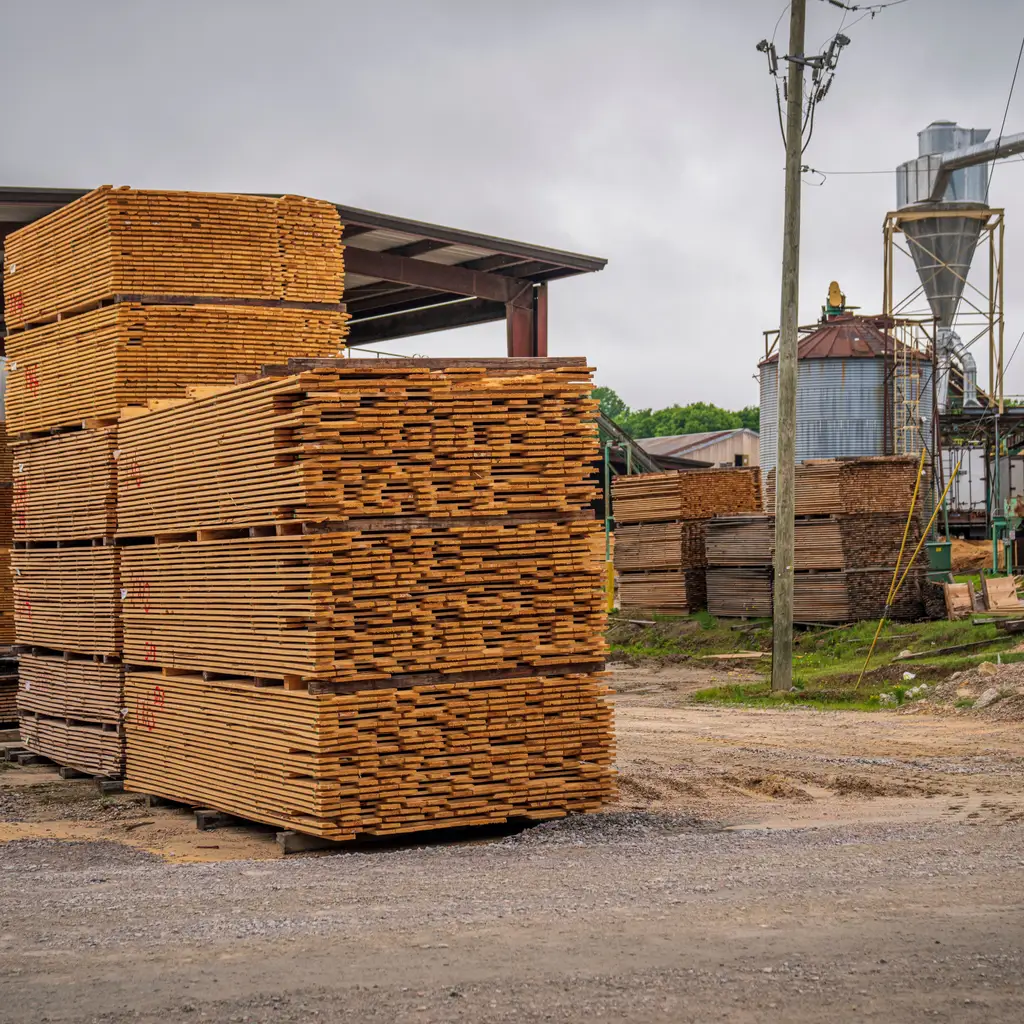
You turn logs into lumber, with saws, conveyors and yard movements keeping orders moving. A fire can damage stock from several owners, and one failed machine can stop the line while you wait for parts or outside milling capacity.
The Southern Agency can review your sawmill operations and storage practices to help you select appropriate insurance. For example, we can discuss how coverage for a planer's mechanical breakdown differs from the separate protection required for the lumber in your yard.
Wood dust and combustible stock can contribute to fire, and airborne dust can present an explosion hazard. The mill's materials, dust accumulations, and ignition sources need a site-specific assessment.
Head saws, edgers, resaws, planers, and conveyors are central to output, and a failure can shut down the entire mill.
Operators working around fast-moving saws and conveyors face amputation, struck-by, and entanglement hazards.
Large, combustible inventories of logs and finished lumber can be lost to fire, storm, or theft at the mill site.
Lumber sold for construction can lead to product claims if it is defective, improperly dried, or mis-graded.
Damage to the mill building or kilns can stop production and revenue while repairs and rebuilding take place.
Policies to ask about. Which ones fit depends on your operations, your contracts, and the carrier’s forms.
These hypothetical examples are not agency claim results. Whether a loss is covered depends on the facts, policy terms, and applicable exclusions.
A fire damages machinery, the mill building, and nearby lumber. Applicable property terms may cover insured interests and causes, subject to values, limits, and deductibles. Outdoor or customer-owned stock, debris removal, and the cost of restarting production require their own review; one building limit does not answer all of them.
An edger fails and production cannot continue. Breakdown terms may address an eligible machine and cause; wear and maintenance exclusions still apply. Review income, waiting periods, parts lead times and temporary outside milling separately from the repair bill and penalties for undelivered orders.
A worker suffers an amputation injury near the head saw. Applicable worker coverage may address medical and wage benefits for the employer, task, and work state involved. Review hired workers and maintenance providers on their own facts; property or customer liability insurance does not establish worker benefits.
Start with the work you do and the questions your current policies leave unanswered. Carrier options depend on your location, risk, and underwriting. Explore our approach.
Have outdoor stock, locations, and ownership described explicitly. Compare peak values, valuation, and causes with indoor stock and work in progress. A mill building schedule does not by itself settle logs or lumber belonging to customers.
Not automatically. Claims of product-caused injury or property damage differ from refunds, regrading, replacement, and a buyer's contractual costs. Explain the represented grade, drying condition, and intended use, then compare the allegation and agreement with the policy.
The repair claim and the interruption have separate conditions. Ask about the covered cause, waiting and restoration periods, income calculation, parts delays, and temporary outside milling. A repair payment does not establish reimbursement for every lost order or delivery penalty.
Identify who owns the logs, what work was agreed and when the customer accepts the lumber. Compare property-of-others and liability terms with damage during processing, poor yield and grade promises. Taking custody alone does not establish payment for every loss.
The forklift, the lumber and the injured person involve different interests. Identify the owners of the equipment and stock, and whether the person is an employee, customer, or provider. Compare equipment, property, liability, and worker terms rather than assume one machine limit covers the whole event.
No. Protection and inspection records help explain the site, but the insured property, cause, exclusions, and limits still govern a claim. Qualified safety review and compliance duties remain separate from the insurer's underwriting decision.
Bring your questions, current policies, and relevant contracts. An agent can review coverage terms, exclusions, and the information carriers ask for, then explain the options available to you.