

Falls from height
Framing on open decks, roofs, and scaffolds exposes crews to serious fall injuries.
Try a different word, or check the spelling.
You may finish the framing before another trade closes the building in. Protection for exposed lumber and the unfinished structure needs to fit that interval, as well as your tools and crew.
The Southern Agency can help you protect your framing business by reviewing your project sites, tools, and employee safety needs.
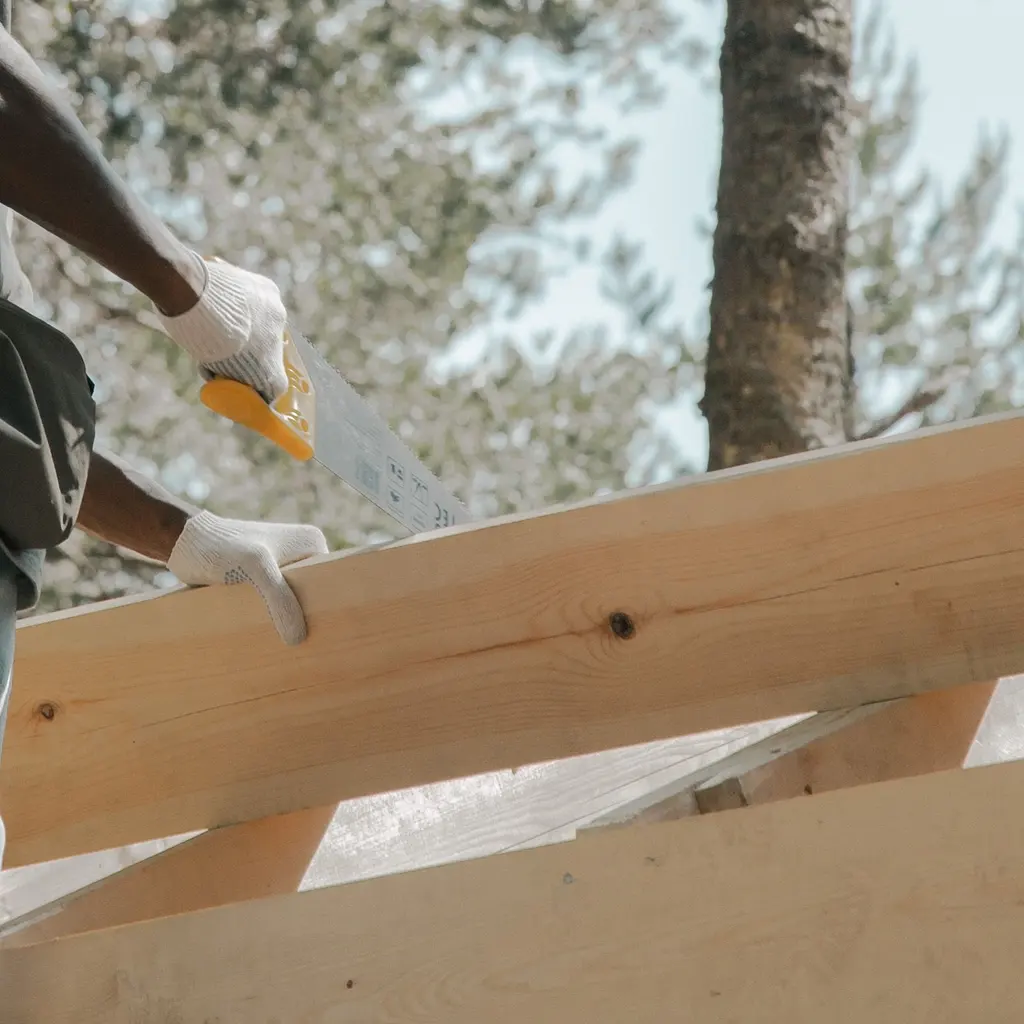
You frame walls, floors and roofs for new buildings, exposing your crew to falls and your unfinished work to severe weather. A fall from a ladder or a storm damaging a structural frame can quickly interrupt your project and create significant costs.
The Southern Agency can review your framing operations, site safety, and contractual requirements to help you select appropriate insurance. For example, we can help you choose coverage for physical storm damage to a project under construction while explaining how liability applies to structural defects.
Framing on open decks, roofs, and scaffolds exposes crews to serious fall injuries.
Lifting and placing lumber, trusses, and beams creates crush, strain, and back-injury exposure for workers.
Errors in framing or load paths can lead to structural defect claims that may not appear until after the building is enclosed.
Partially framed structures are exposed to wind, fire, and water before they are dried in and enclosed.
Nail guns, saws, compressors, and lifts move between sites and are exposed to theft and damage.
Stacked lumber and framing materials on open job sites are vulnerable to theft before they are installed.
Circular saws, nailers, and falling materials create laceration and struck-by hazards across the crew.
Policies to ask about. Which ones fit depends on your operations, your contracts, and the carrier’s forms.
These hypothetical examples are not agency claim results. Whether a loss is covered depends on the facts, policy terms, and applicable exclusions.
Hypothetical: a framer falls from an open roof deck. Workers' compensation may provide benefits for a covered employee injury under applicable law. Identify the employer and preserve subcontract and job records; injury to another firm's employee raises a separate liability review.
Hypothetical: a storm damages a partially framed building before enclosure. Builders risk may address covered damage to insured project property. Identify who arranged coverage, the framer's and owner's interests, selected wind terms, temporary protection and the coverage period; exposed framing alone does not establish payment.
Hypothetical: a homeowner alleges a framing error caused structural problems after enclosure. Separate correcting the frame from resulting damage to other building components or injury. GL completed-operations terms may address covered resulting claims, but a structural warranty or demand to rebuild the frame is not automatically covered.
Start with the work you do and the questions your current policies leave unanswered. Carrier options depend on your location, risk, and underwriting. Explore our approach.
Crews work on open decks and roofs and handle heavy lumber and trusses, creating fall, crush, and lifting hazards. Workers' compensation may provide qualifying employee benefits. Review actual employers, duties and work states rather than assuming one requirement fits every crew.
Builders risk may insure covered project property during construction. Check whether the owner, GC or framer arranges it, whose interests are insured, values, perils and the coverage period. Fire, wind and water have different terms; enclosure alone does not establish when protection ends. The contract's allocation is not itself proof of coverage.
General liability may address covered injury or resulting damage to other building components caused by framing, subject to actual completed-operations and other terms. Correcting the frame itself or honoring a structural warranty is a separate cost. Keep work, completion, damage, and claim dates; discovery after enclosure alone does not select the responding policy.
Inland marine coverage may respond to theft or damage of nailers, saws, compressors, and lifts that travel between sites, subject to scheduled limits and policy terms.
A GC may request liability, workers' compensation, excess limits, and particular endorsements before framing starts. Compare the written request with actual policies and ongoing and completed-operations additional-insured rights. A certificate or larger limit does not establish that every contract term is met.
Underwriters weigh the height of work, payroll, project mix, equipment values, and safety record. Coverage availability depends on underwriting and loss history.
Bring your questions, current policies, and relevant contracts. An agent can review coverage terms, exclusions, and the information carriers ask for, then explain the options available to you.