

Emergency vehicle accidents
Responding under lights and sirens, often through intersections and against traffic, raises the likelihood and severity of collisions involving ambulances.
Try a different word, or check the spelling.
Your crew's care begins before the stretcher reaches the ambulance and continues during the journey. Patient-handling, clinical, and vehicle liability need coordinated terms, while injuries to the crew are a different responsibility.
The Southern Agency can help you review actual response and transfer work across vehicle, patient-care, equipment and crew-injury terms.
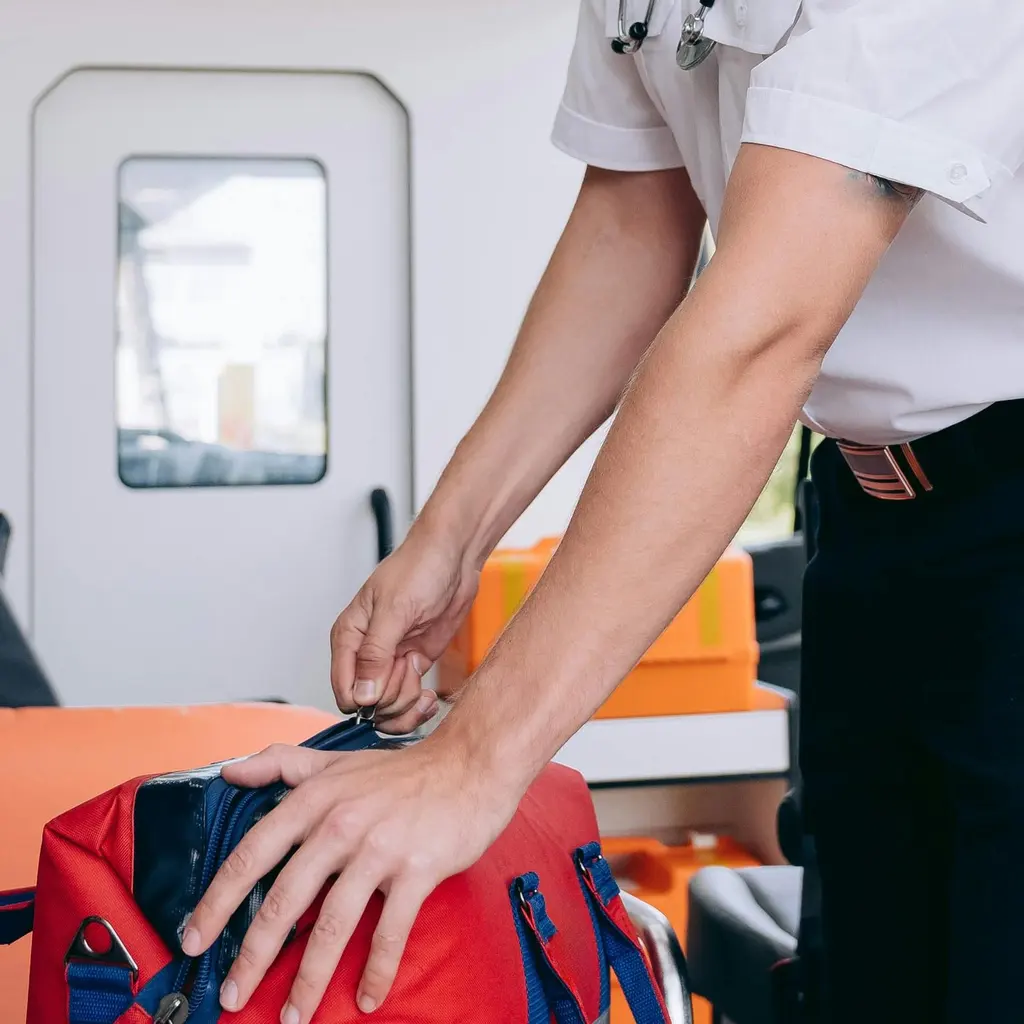
You operate emergency vehicles and crews that provide medical care in high-pressure situations, often under extreme time constraints. A vehicle collision or an error during field treatment can lead to complex liability claims.
The Southern Agency can review your dispatch, transport and clinical protocols to help you select appropriate insurance for your EMS operation. For instance, we can help coordinate your auto liability with professional liability coverage for field-based patient care.
Responding under lights and sirens, often through intersections and against traffic, raises the likelihood and severity of collisions involving ambulances.
Paramedics make rapid clinical decisions and administer drugs in uncontrolled settings, exposing the service to professional liability allegations.
Carrying patients down stairs and loading stretchers causes back, shoulder, and musculoskeletal injuries that drive workers compensation claims.
A patient can be injured by a sudden stop, a dropped stretcher, or a fall while being moved, creating bodily-injury exposure.
Monitors, defibrillators, and ventilators are costly and mission-critical, and damage or breakdown can take a unit out of service.
Dispatch, run reports, and billing hold protected health and payment information that can be breached or misused.
Crews encounter blood, bodily fluids, and contagious patients, creating exposure incidents that may trigger workers compensation and follow-up care.
Policies to ask about. Which ones fit depends on your operations, your contracts, and the carrier’s forms.
These hypothetical examples are not agency claim results. Whether a loss is covered depends on the facts, policy terms, and applicable exclusions.
An ambulance responding to a call collides with a passenger vehicle in an intersection. Business auto coverage may respond to liability and damage, depending on the specific policy, endorsements, exclusions, and facts. Identify emergency use, driver/vehicle, liability versus purchased physical damage, and any patient-treatment allegation.
A family alleges a paramedic administered the wrong dose during transport. A professional liability policy may respond to defense and indemnity, depending on policy terms and the circumstances. Compare dosing and transport exclusions, insured clinician/entity, and reporting dates; auto liability is not proof of medical cover.
A paramedic injures their back carrying a patient down a staircase. Workers compensation may help with medical care and lost wages, subject to the policy and state requirements. Employment, jurisdiction, and qualifying injury govern benefits; the scenario is not a claim-frequency or payment prediction.
Start with the work you do and the questions your current policies leave unanswered. Carrier options depend on your location, risk, and underwriting. Explore our approach.
The two address different risks. Business auto may respond to collisions during a response, while professional liability may respond to allegations about the medical care crews deliver. EMS operators commonly carry both because losses arise on the road and in the patient compartment.
Emergency operation increases collision exposure. Coverage applies subject to policy terms, but driving records, training, and response protocols affect availability and pricing.
It may provide qualifying medical and wage benefits for an employee injured lifting or loading a patient. Identify actual employer, crew status, work state and injury facts. Volunteer or contractor arrangements need their own review; patient injury is a different liability interest.
Equipment breakdown and property-related coverage may help repair or replace failed monitors and ventilators and limit downtime. Whether a loss is covered depends on the policy, endorsements, and exclusions.
Run reports and billing systems hold protected health and payment data. Cyber liability may help with notification and recovery costs after a breach, depending on the specific policy and the facts.
Carriers weigh fleet size, call volume, level of care, payroll, driving records, and claims history. Because EMS operations vary widely, premiums differ and coverage availability depends on underwriting.
Bring your questions, current policies, and relevant contracts. An agent can review coverage terms, exclusions, and the information carriers ask for, then explain the options available to you.