

Standing tree and orchard loss
Fire, frost, windstorm, drought, and disease can damage or kill long-lived almond trees, reducing yields for many seasons.
Try a different word, or check the spelling.
A short harvest puts your shakers, sweepers, and storage to work at once. The insurance questions extend from a damaged machine to the almonds still waiting for delivery.
The Southern Agency can help you evaluate your orchard's specific asset and harvest risks.
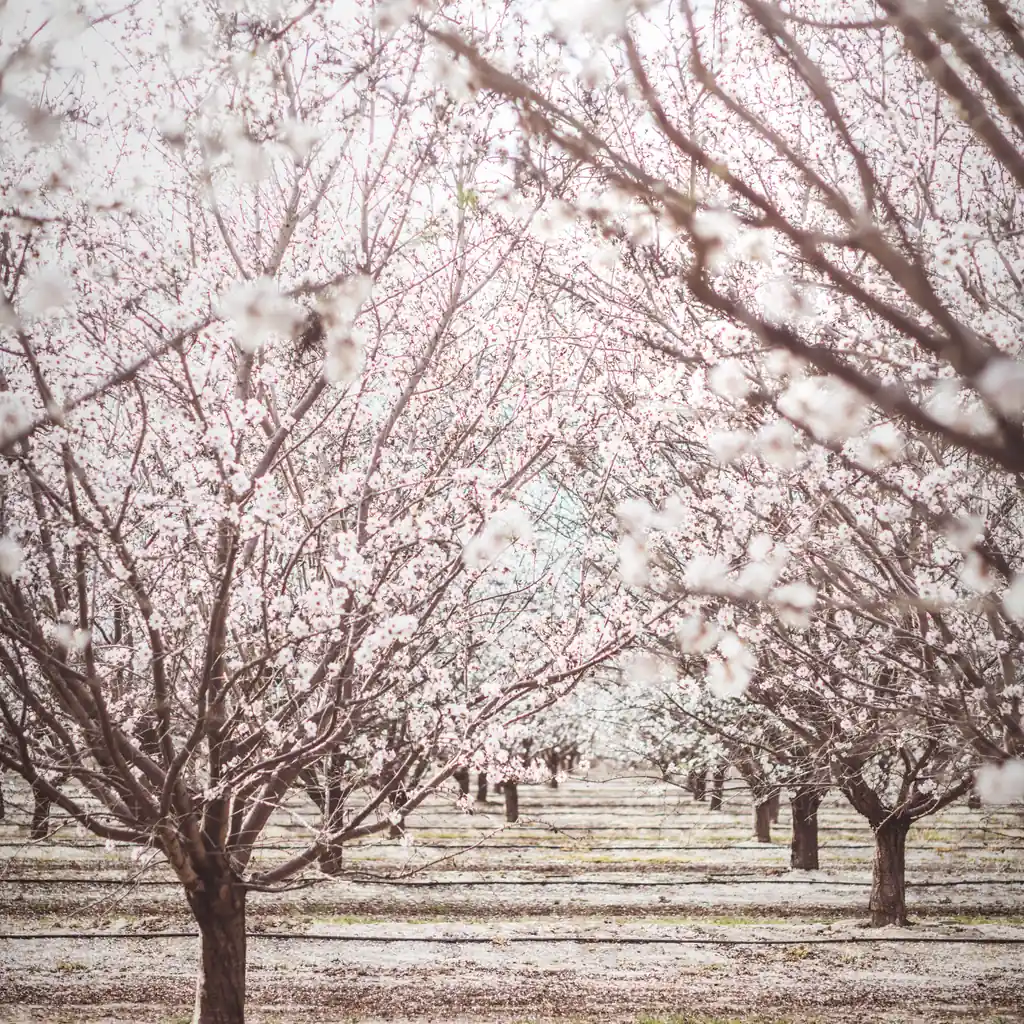
You care for long-lived trees before a short mechanical harvest and the hulling or storage that follows. A failed irrigation pump can stress a block, while a shaker fire or moisture in stored nuts threatens different parts of your season.
The Southern Agency can review your orchard management and processing contracts to help you select appropriate insurance. For instance, we can determine if your coverage adequately distinguishes between equipment failure and the resulting loss of harvest or tree health.
Fire, frost, windstorm, drought, and disease can damage or kill long-lived almond trees, reducing yields for many seasons.
Wells, pumps, and irrigation systems are critical, and a breakdown or power loss during dry periods can stress the entire orchard.
Shakers, sweepers, and harvesters are high-value mobile machines exposed to fire, breakdown, collisions, and theft during the season.
Mechanical harvest generates heavy dust, raising air-quality complaints and worker respiratory concerns depending on operations.
Pesticide and fertilizer application and storage create pollution exposure that standard policies commonly exclude.
Hulled and stored almonds can be damaged by fire, moisture, pests, or contamination such as aflatoxin before sale.
Policies to ask about. Which ones fit depends on your operations, your contracts, and the carrier’s forms.
These hypothetical examples are not agency claim results. Whether a loss is covered depends on the facts, policy terms, and applicable exclusions.
Hypothetical: an irrigation motor fails electrically while temperatures are high. Equipment breakdown may pay covered motor repairs, but stressed trees and reduced almond yield require their own coverage trigger; they are not automatically part of the machinery claim.
Hypothetical: a rented shaker catches fire during harvest. An equipment or inland marine form may cover fire damage if rented machines and the operating location are included. The rental agreement's loss-of-use charge may exceed or fall outside the insured physical-damage obligation.
Hypothetical: almonds develop mold in storage before delivery. Property insurance is not a quality guarantee: response depends on an insured cause of damage and the spoilage, mold, and deterioration exclusions. Rejected product alone does not establish a covered property loss.
Start with the work you do and the questions your current policies leave unanswered. Carrier options depend on your location, risk, and underwriting. Explore our approach.
Treat production and the trees as separate questions. USDA's almond crop provisions cover eligible almond production and specified causes of loss, with acreage, tree-age, and reporting conditions. They are not blanket replacement insurance for the trees. Check current program eligibility and any separate tree coverage without assuming either is available for every block.
Review the equipment schedule, insured perils, and off-premises and transit terms. Include rented machines and their values. A policy covering fire or overturn may still exclude internal mechanical breakdown and contractual loss-of-use charges.
Equipment breakdown may address a covered pump failure, but resulting crop damage is separate. Under the federal almond crop provisions, failure of irrigation water supply must meet the specified insured-peril condition; a broken pump is not enough to assume a crop payment.
Chemical use, storage, and harvest dust can produce allegations beyond ordinary premises liability. Describe the work and review pollution exclusions and any environmental form's covered operations. Do not assume a chemical-use policy also covers every dust-related claim or regulatory cost.
Check the insured property definition, location, and peak seasonal limit. Moisture, mold, pests, gradual deterioration, or a processor's rejection may be excluded or require a specific insured cause; being listed as inventory is not coverage for every quality loss.
Premiums commonly reflect acreage, tree maturity, irrigation and equipment values, processing on-site, chemical use, employees, and loss history. Final pricing depends on underwriting and the details of your operation.
Bring your questions, current policies, and relevant contracts. An agent can review coverage terms, exclusions, and the information carriers ask for, then explain the options available to you.