

Frost, hail, and wind crop damage
A late spring frost or a summer hailstorm can ruin a season's apples and injure mature trees that took years to establish and bear fruit.
Try a different word, or check the spelling.
The apples in cold storage may represent months of your work still waiting to be sold. Refrigeration and stored-fruit coverage deserve attention alongside the orchard itself.
The Southern Agency can help you review coverage from picking and cold storage through farm-stand sales.
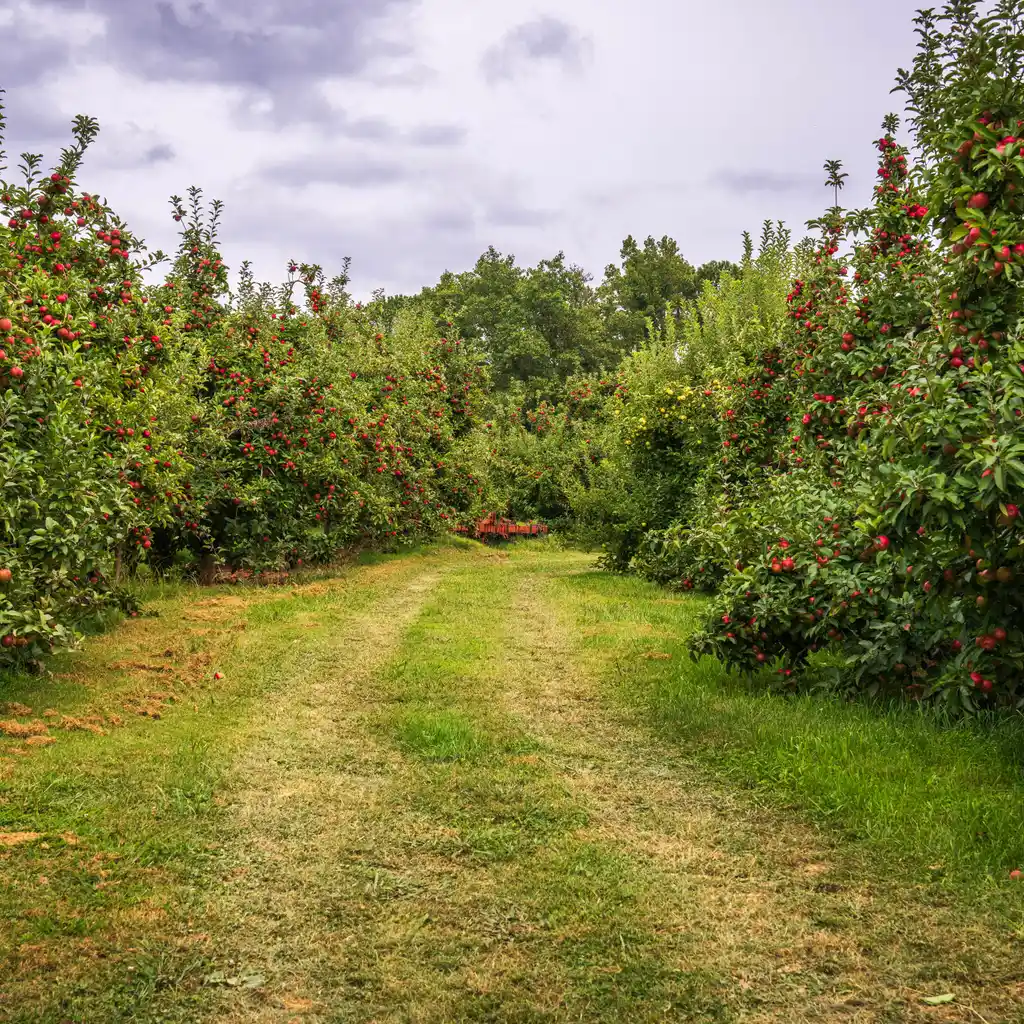
You tend your trees through the growing season, then pick, pack, and sell the harvest. If you store apples or welcome U-pick visitors, a refrigeration failure or a guest's fall can add unexpected costs to a season's work.
The Southern Agency can review how you grow, store and sell your fruit and help you choose insurance for those activities. That may include liability for orchard visitors and equipment breakdown for refrigeration, while trees, unharvested apples, and stored fruit need separate coverage attention.
A late spring frost or a summer hailstorm can ruin a season's apples and injure mature trees that took years to establish and bear fruit.
Families picking fruit, riding wagons, or walking uneven orchard rows can fall or be struck, creating premises liability exposure.
Controlled-atmosphere and cold storage hold fruit for months, and an equipment failure can spoil a large share of harvested inventory.
Fresh cider, packed apples, and value-added products carry foodborne-illness and contamination exposure once sold to the public.
Seasonal pickers working from ladders and platforms during a short harvest window face falls, strains, and equipment-related injuries.
Sorters, washers, and packing-line machinery represent significant value and can be damaged by fire, mechanical failure, or power surges.
Tractors, sprayers, and mowers move through the orchard and can overturn, collide, or be damaged away from the main buildings.
Policies to ask about. Which ones fit depends on your operations, your contracts, and the carrier’s forms.
These hypothetical examples are not agency claim results. Whether a loss is covered depends on the facts, policy terms, and applicable exclusions.
Hypothetical: a refrigeration compressor fails during a weekend and stored apples deteriorate. Equipment breakdown may address covered compressor repairs. Payment for the apples requires applicable spoilage coverage and limits; ordinary deterioration or an excluded cause may leave the inventory loss unpaid.
Hypothetical: a customer trips on an orchard path and alleges the route was unsafe. General liability may address the covered claim if U-pick is an insured operation. A visitor injury is not proof of negligence, and an excluded attraction or activity can alter the response.
Hypothetical: customers allege illness from bottled cider pressed by the orchard. Product liability may address covered injury allegations if cider processing is within scope. The orchard's own recall, disposal, and replacement costs require separate review rather than an assumption that product liability pays them.
Start with the work you do and the questions your current policies leave unanswered. Carrier options depend on your location, risk, and underwriting. Explore our approach.
Do not infer tree or crop coverage from a policy for barns and stored fruit. Ask separately about the trees, the year's production, and any crop-program eligibility, then check the exact insured causes and valuation. A crop-yield payment is not necessarily a tree-replacement payment.
Review general liability for the actual visitor activities and locations. U-pick, tours, wagon rides, and events should each be disclosed; they may have different restrictions. A claim also depends on the alleged liability and policy exclusions, not just the fact that someone was hurt.
Separate repair of a covered failed machine from damage to apples and lost sales. Spoilage and income extensions may have their own limits, waiting periods, and conditions. A utility outage or atmosphere-control problem also needs its own trigger review.
These sales create potential injury claims. Confirm cider processing, bottling, and any outside processing are within the insured operations. Product liability may address a covered injury claim but does not automatically pay to recall or replace the orchard's product.
Requirements depend on the state and the actual agricultural employment arrangement. Review picker and packing payroll and any labor contractor's coverage; a short harvest season does not by itself establish an exemption.
Premiums commonly reflect acreage, cold-storage value, agritourism activity, product sales, payroll, and loss history. Final pricing depends on underwriting and your specific operation.
Bring your questions, current policies, and relevant contracts. An agent can review coverage terms, exclusions, and the information carriers ask for, then explain the options available to you.