

Damage to yards and hardscape
Trenching and boring across private property can ruin landscaping, sprinkler systems, driveways, and walkways.
Try a different word, or check the spelling.
Once your service line is backfilled, a leak can affect much more than the new pipe. Liability for resulting damage needs to be reviewed apart from restoring the trench or replacing a fitting.
The Southern Agency can help you evaluate your waterline installation work and secure appropriate coverage.
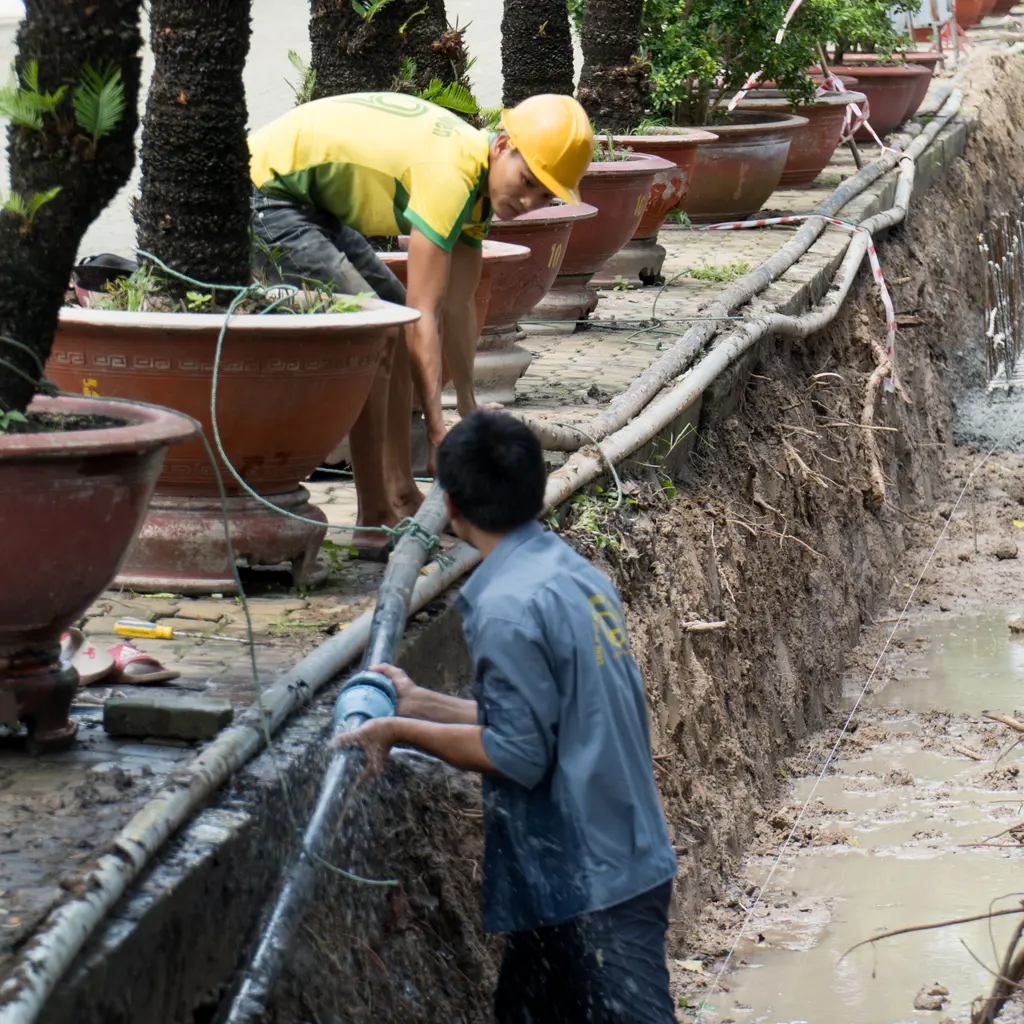
You connect properties to public water mains, involving trenching through private yards and driveways where leaks or underground utility strikes are common concerns. These residential and commercial service lines require attention to both property protection and site restoration.
The Southern Agency can review your service-line work and connection standards to help you select appropriate insurance. We can assist you in distinguishing between liability for accidental property damage and the coverage required for your boring units and mini-excavators.
Trenching and boring across private property can ruin landscaping, sprinkler systems, driveways, and walkways.
Short service runs still cross gas, electric, and sewer lines, and a strike can cause serious third-party damage.
A leak after backfill can flood crawlspaces or undermine foundations, leading to property-damage claims.
Improper tie-ins or disinfection during connection can raise contamination and backflow exposure.
Crews face trench, lifting, and struck-by hazards while excavating and connecting service lines.
Mini-excavators, boring units, and pumps left at homes are exposed to overnight theft and damage.
Policies to ask about. Which ones fit depends on your operations, your contracts, and the carrier’s forms.
These hypothetical examples are not agency claim results. Whether a loss is covered depends on the facts, policy terms, and applicable exclusions.
A new service connection leaks after backfill and floods a homeowner's crawlspace. General liability may respond to resulting damage, depending on policy terms and the facts of the incident.
Trenching across a yard severs an irrigation system and damages landscaping. Identify the damaged irrigation and any separate property damage, then review underground liability terms and restrictions for damage to property being worked on. The agreed cost of restoring the excavated yard is a separate obligation, not automatically part of the liability claim.
A mini-excavator is taken overnight from a residential job site. An inland marine policy may respond to the loss, depending on policy terms and scheduled values.
Start with the work you do and the questions your current policies leave unanswered. Carrier options depend on your location, risk, and underwriting. Explore our approach.
Discuss liability for covered resulting harm, qualifying employee benefits, vehicles, and mobile equipment, with actual pollution and excess needs. Describe service connections, boring, public crossings, and restoration duties. The appropriate terms depend on operations, employers, and contracts, not a standard package or a residential-versus-commercial label alone.
GL may address covered accidental damage to irrigation, paving or surrounding property. Separate that harm from the excavation and restoration you agreed to perform and check underground and work-property restrictions. A customer's request to restore the yard does not itself establish a covered liability loss.
GL may address covered resulting crawlspace or foundation damage; correcting the failed joint is a separate question. Preserve installation, testing, handoff, damage and claim dates and review water and completed-operations terms and restrictions for damage to your work. Backfill or late discovery alone does not determine the responding policy.
Inland marine may address covered physical loss to insured mini-excavators, boring units, and pumps at sites or in transit. Separate trucks, trailers and loads and compare definitions, ownership, values, theft conditions and operating stages. Road travel does not automatically make equipment or pipe insured by the auto policy.
Environmental terms may address covered cleanup or third-party pollution claims from included backflow or contamination events. Confirm service-line work, contaminants, known conditions, and reporting. A test failure, permit obligation, or allegation alone does not establish insured remediation.
A commercial agreement may request an endorsement extending its stated protection to specified additional insureds. Compare parties, ongoing and completed-operations scope and conditions with actual endorsements before work begins. A request, certificate or connection permit does not add coverage or establish every requested term is available.
Bring your questions, current policies, and relevant contracts. An agent can review coverage terms, exclusions, and the information carriers ask for, then explain the options available to you.