

Underground utility strikes
Trenching or boring into unmarked gas, water, electrical, or fiber lines can cause injury, service outages, and large interruption claims.
Try a different word, or check the spelling.
Before the trench is closed, your installation has to line up with the next stage of the project. Insurance for damaged conduit is a different matter from correcting an alignment that misses the specification.
The Southern Agency can help you manage your underground installation risks by reviewing your bond and liability insurance needs.
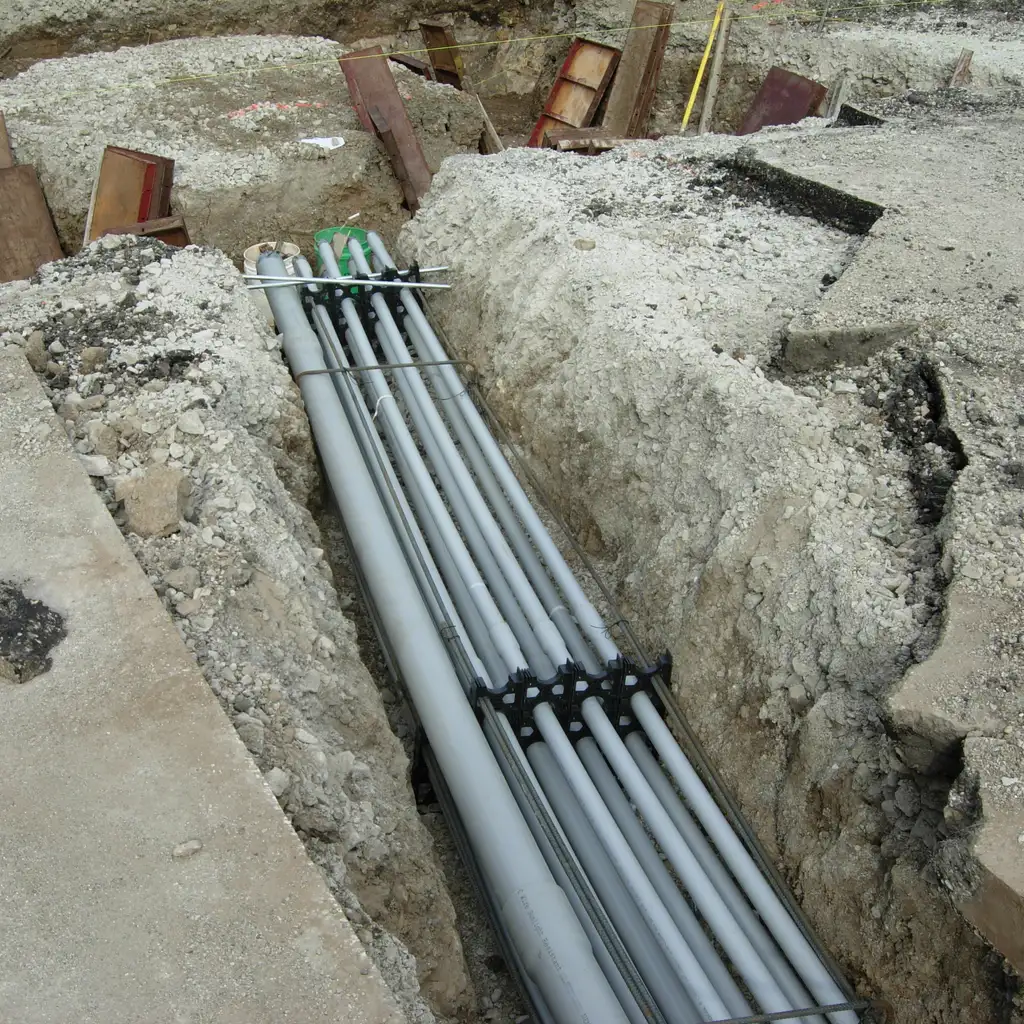
You install underground conduit systems through trenching and boring, often working near live utilities where a strike can interrupt regional services. The combination of roadway hazards, cave-in risks, and concrete-encased duct banks requires careful risk management.
The Southern Agency can review your underground installation and right-of-way duties to help you choose insurance. We can discuss liability for struck utilities, protection for your equipment and any separate bond obligations in the project terms.
Trenching or boring into unmarked gas, water, electrical, or fiber lines can cause injury, service outages, and large interruption claims.
Open trenches and bores expose crews to cave-ins and struck-by hazards from equipment operating in confined work zones.
Work in rights-of-way and near traffic puts crews and the public at risk and creates exposure from lane closures and detours.
Conduit runs and duct banks can be crushed, misaligned, or damaged during backfill, leading to rework and schedule claims.
Directional boring rigs, trenchers, and cable pullers are valuable, mobile assets exposed to theft, damage, and breakdown.
Actual bids, contracts or applicable public-work rules may specify bond obligations and insurance terms. Check the particular request, timing, issued endorsements, and separate surety approval rather than assume a universal requirement.
Policies to ask about. Which ones fit depends on your operations, your contracts, and the carrier’s forms.
These hypothetical examples are not agency claim results. Whether a loss is covered depends on the facts, policy terms, and applicable exclusions.
Hypothetical: a bore strikes an unmarked fiber line and businesses lose service. Identify the line and owner, resulting damage or loss of use and each downstream financial demand. GL may address covered injury or property damage, but not every interruption charge. Preserve locate, private-line, bore-path and depth records; unmarked status alone does not decide fault or coverage.
Hypothetical: a trench wall collapses and injures a worker installing conduit. Workers' compensation may provide qualifying medical and wage benefits under applicable law. Identify the actual employer, duties and work state; another firm's worker and the trenching equipment require separate liability and property review.
Hypothetical: a boring rig is stolen from a staged job site overnight. Inland marine may help replace it after covered theft. Review locating electronics, accessories, valuation, security conditions, deductible and rental interests. The equipment schedule does not automatically cover the truck or trailer that carried it.
Start with the work you do and the questions your current policies leave unanswered. Carrier options depend on your location, risk, and underwriting. Explore our approach.
Discuss liability for resulting harm, qualifying employee benefits, rigs and vehicles, project-property responsibilities, excess needs and separate bond requests. Describe trenching, bores, duct-bank forming/pouring, indoor raceways, and actual electrical work. Accepted duties, employers, and contracts determine terms, not a standard package or automatic bonding.
GL may address covered resulting third-party injury, property damage, or loss of use under actual underground and conduit terms. Preserve line ownership, locating/private-line, bore-path, and depth records. Damaged line repair and resulting harm differ from purely financial downstream outage demands, conduit correction, and pollution; an unmarked line alone does not decide fault or payment.
Inland marine may address covered physical loss to insured rigs, trenchers, and pulling gear at sites or in transit. Review ownership or hire, values, accessories and theft/security conditions separately from trucks, trailers and loads. Internal breakdown, wear, recovery, replacement hire, and idle crews need separate terms.
Check the actual bid, contract and applicable public-work rules for whether performance, payment or other bonds are requested and when. Each supports a specified obligation to the obligee or eligible beneficiaries. Separate financial/capacity review and approval are required, and indemnity may require reimbursement. This is not accident insurance, a universal public-job mandate or confirmation that the agency can arrange the bond.
Traffic control, pedestrians, lane closures, and restoration add duties to disclose alongside the bore and trench scope. GL and auto may address covered third-party harm within their accepted operations; excess may add limits above covered underlying liabilities. Compare actual endorsements, attachment, and exclusions with requests. More limit does not insure every outage or restoration bill.
It may address covered project-property loss to insured installed conduit or duct banks during the included construction period. Identify who arranges it, the insured parties/property, and when cover ends, including testing or acceptance terms. Meeting alignment specifications, reworking a defective run and every delay charge are not automatically insured merely because work is incomplete.
Bring your questions, current policies, and relevant contracts. An agent can review coverage terms, exclusions, and the information carriers ask for, then explain the options available to you.