

Working near active aircraft operations
Construction inside or beside operating movement areas creates serious incursion and foreign-object-debris exposure that can damage aircraft or disrupt flights.
Try a different word, or check the spelling.
Your crew may have a short closure window to leave an airfield ready for aircraft again. Coverage needs to account for construction around aircraft, not just ordinary paving work.
The Southern Agency can help you compare airfield construction duties with the coverage terms offered.
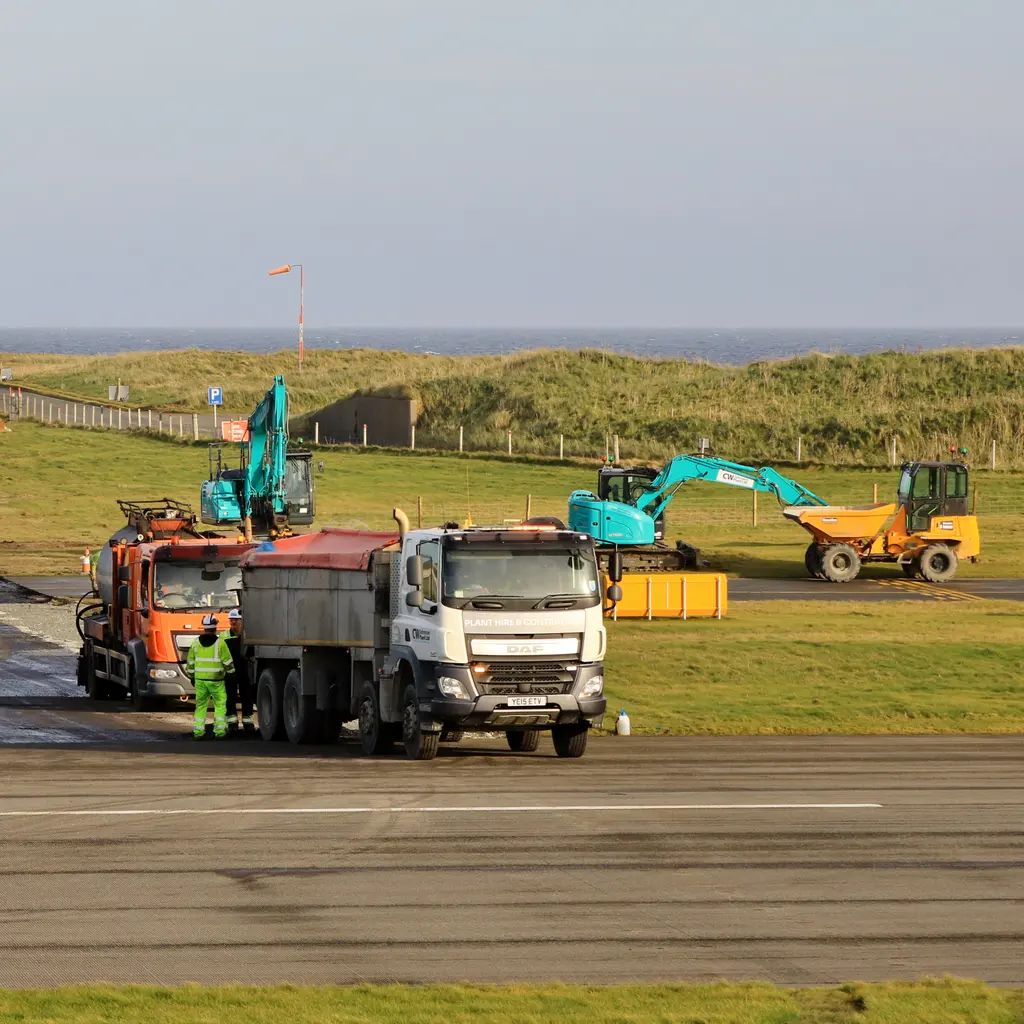
You pave and light active airfields where crews must fit into tight safety plans between aircraft operations. Pavers and fuel staging in these zones present risks, including damage to airport facilities or debris reaching a plane.
The Southern Agency can review your airfield operations and safety plans to help you select appropriate insurance. We can discuss liability for airport facilities, spill protection, and equipment coverage, while helping you keep performance bond and project-specification concerns separate from your insurance coverage.
Construction inside or beside operating movement areas creates serious incursion and foreign-object-debris exposure that can damage aircraft or disrupt flights.
Paving trains, mills, rollers, and graders moving across the airfield create struck-by, overturn, and physical-damage exposure to a large fleet.
Tack coat, hot-mix asphalt, fuel, and equipment fluids can spill or migrate, creating cleanup and pollution liability on airport property.
Night and seasonal closures with liquidated damages mean weather or breakdowns can trigger costly schedule overruns.
Pavement or lighting that misses the project's acceptance specification can require rework. A later defect that causes injury or other property damage raises a separate liability question; failing a test alone does not establish insurance coverage.
Hot asphalt, silica dust, low-visibility night work, and high-speed equipment expose crews to burns, respiratory, and struck-by injuries.
Trucks moving aggregate, asphalt, and equipment to the airport create on-road liability and cargo exposure.
Policies to ask about. Which ones fit depends on your operations, your contracts, and the carrier’s forms.
These hypothetical examples are not agency claim results. Whether a loss is covered depends on the facts, policy terms, and applicable exclusions.
Hypothetical: Material tracked from the work zone reaches an adjacent taxiway and damages an aircraft engine. The claim needs review under the contractor's actual general or aviation liability coverage, including airside restrictions and the work described to the insurer. Airport access approval alone does not confirm coverage.
Hypothetical: A staged fuel tank leaks onto the apron. Environmental coverage may address covered cleanup and third-party liability, but the insurer must review the release, covered operations, reporting conditions, and exclusions. Do not assume ordinary general liability covers remediation.
Hypothetical: A pavement section fails the project's smoothness specification and must be ground or replaced. The cost of bringing the contractor's own work into compliance is a rework obligation, not automatically a completed-operations insurance claim. Any separate resulting damage requires its own policy review; missed-window penalties are a separate contract issue.
Start with the work you do and the questions your current policies leave unanswered. Carrier options depend on your location, risk, and underwriting. Explore our approach.
That requires a review of the policy and the airport contract. Identify aircraft exposure, movement-area access, and vehicle use explicitly. Ask whether general or aviation liability is needed and whether the excess coverage follows it. Increasing a limit will not fix excluded operations.
Check the solicitation and applicable public-project requirements. Performance and payment bonds are common contract requests, but the forms, amounts, and approval depend on the project and surety underwriting. A bond does not establish insurance for your own rework costs.
Fuel or tack-coat releases can create cleanup and third-party claims. Review environmental coverage for the materials, site, and release conditions involved, including reporting requirements. Coverage remains subject to the policy and investigation.
Contractors equipment coverage may address covered physical damage or theft to scheduled machinery there. Check rented units, transit, operating locations, valuation, and deductibles. The airport's acceptance of your certificate does not confirm a particular equipment loss is covered.
Do not budget for liability insurance to pay simply to grind or replace pavement that misses the specification. Separate any resulting physical damage from the cost of correcting your own work. Policy wording, facts, and state law determine the insurance response.
Provide project revenue, payroll, equipment values, fleet details, self-performed scopes, active-airfield exposure, and claims history. Include the airport's contract and safety plan. Discuss insurance pricing and surety capacity separately; neither can be established from the page alone.
Bring your questions, current policies, and relevant contracts. An agent can review coverage terms, exclusions, and the information carriers ask for, then explain the options available to you.