

Burns from hot asphalt and tar
Heated material and equipment expose crews and nearby people to serious burn injuries during patching and sealcoating.
Try a different word, or check the spelling.
You may be repairing one section of a lot while drivers and pedestrians keep using the rest. Your liability and crew protection need to reflect that working environment, alongside cover for the paving equipment.
The Southern Agency can help you assess your asphalt and paving work to select coverage for your specific equipment and liability needs.
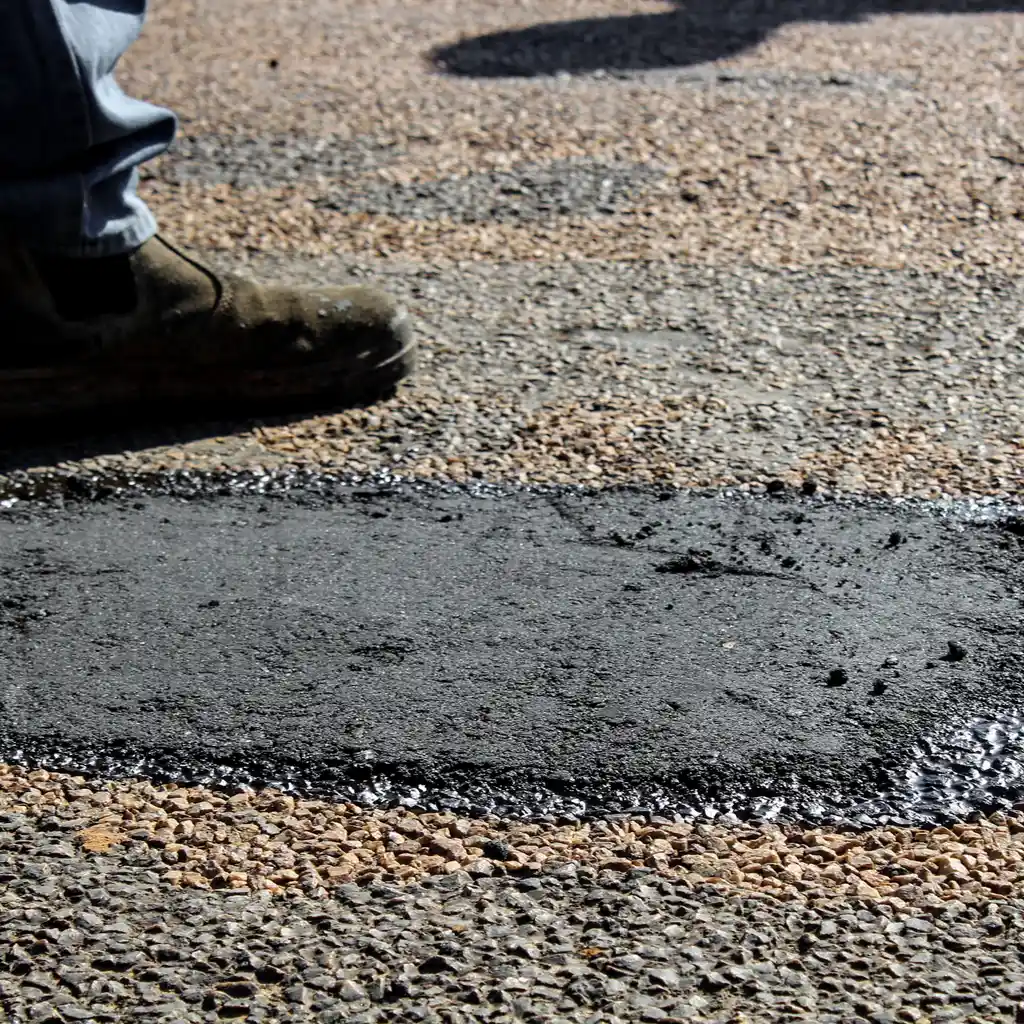
You patch, mill, overlay and stripe driveways, parking lots and roadways using hot-mix or cold-applied products. Your crew faces daily hazards including burns from hot materials, traffic exposure during public-road work and struck-by risks from rollers, pavers, and haul trucks.
The Southern Agency can review your specific repair duties, material handling, and traffic-control procedures to help select appropriate insurance. For instance, we can discuss how your policy may handle damage to a neighboring surface if sealant spills versus liability for an injury occurring in an active work zone.
Heated material and equipment expose crews and nearby people to serious burn injuries during patching and sealcoating.
Working in live lots and roadways puts crews and the public near moving vehicles and incomplete, uneven surfaces.
Sealant or solvent runoff can reach storm drains, while spills can stain adjacent concrete, vehicles or landscaping. Resulting property damage and alleged pollution require separate review.
Pavers, rollers, and trucks can damage curbs, structures, vehicles, or utilities at and around the work area.
A paver, roller, or distributor failure can stall a time-sensitive job and lead to spoiled material and contract disputes.
Pavers, rollers, skid steers, and tools moved between sites and stored overnight face theft and damage exposure.
Premature cracking, raveling, or drainage problems can prompt callbacks and disputes over the completed work.
Policies to ask about. Which ones fit depends on your operations, your contracts, and the carrier’s forms.
These hypothetical examples are not agency claim results. Whether a loss is covered depends on the facts, policy terms, and applicable exclusions.
Hypothetical: a pedestrian crosses a freshly sealcoated lot before it cures and slips. General liability may address a covered third-party injury claim. Preserve reopening instructions, barriers and photographs; liability and coverage depend on the facts and issued policy.
Hypothetical: runoff from a sealcoating job reaches a storm drain and prompts a cleanup demand. A pollution policy may address covered cleanup or third-party claims if the operation and release fall within its terms. A permit violation or fine is not automatically an insured cleanup cost.
Hypothetical: a paver fails mid-overlay and loaded hot mix cools and is wasted while the job is delayed. Breakdown terms may help with covered repairs if the mobile paver and failure qualify. Establish the cause and review repairs, wasted mix, equipment hire and delay costs separately. Material loss or contract-delay costs may remain uninsured even when a repair is covered.
Start with the work you do and the questions your current policies leave unanswered. Carrier options depend on your location, risk, and underwriting. Explore our approach.
Separate pothole patching, milling and overlays, sealcoating, and striping. State the share of public-road and private-lot work, who controls traffic, and whether crews handle hot mix or cold-applied products. Policies and eligibility depend on that actual scope.
It can be. Identify the products used and how runoff could reach drains or adjacent land. Ask whether the pollution policy includes that operation, cleanup, and third-party claims; ordinary staining and a pollution release may be treated differently.
Inland marine may cover listed machinery at sites and in transit against covered physical loss. Confirm values, rented machines, hauling arrangements, and overnight storage. Internal breakdown needs separate review.
Employee injury, damage caused by a truck, and a pedestrian's claim involve different coverage questions. Describe lane closures, flagging, subcontracted traffic control, and lot reopening duties so workers' compensation, auto, and general liability can be reviewed together.
Breakdown terms may help with covered repairs if the actual mobile paver and failure qualify. Establish the cause and review eligibility, schedules and restrictions rather than infer internal failure from any stoppage. Wasted mix, replacement hire, income and delay provisions each need separate review. Spoiled hot mix or contract penalties do not follow automatically from an equipment listing or insured repair.
Provide revenue and payroll by operation, road-versus-lot work, products used, vehicle and machine values, traffic-control responsibilities, subcontract costs, and loss history. Include representative owner or municipal insurance requirements.
Bring your questions, current policies, and relevant contracts. An agent can review coverage terms, exclusions, and the information carriers ask for, then explain the options available to you.