

Crane and heavy-lift incidents
Setting girders and segments with large cranes creates overturn and dropped-load exposure with catastrophic potential.
Try a different word, or check the spelling.
Your worksite may sit above a road or channel that remains open. Protecting the bridge in progress does not replace liability coverage for the traffic passing underneath.
The Southern Agency can review your bridge operations, traffic responsibilities and owner requirements against appropriate insurance.
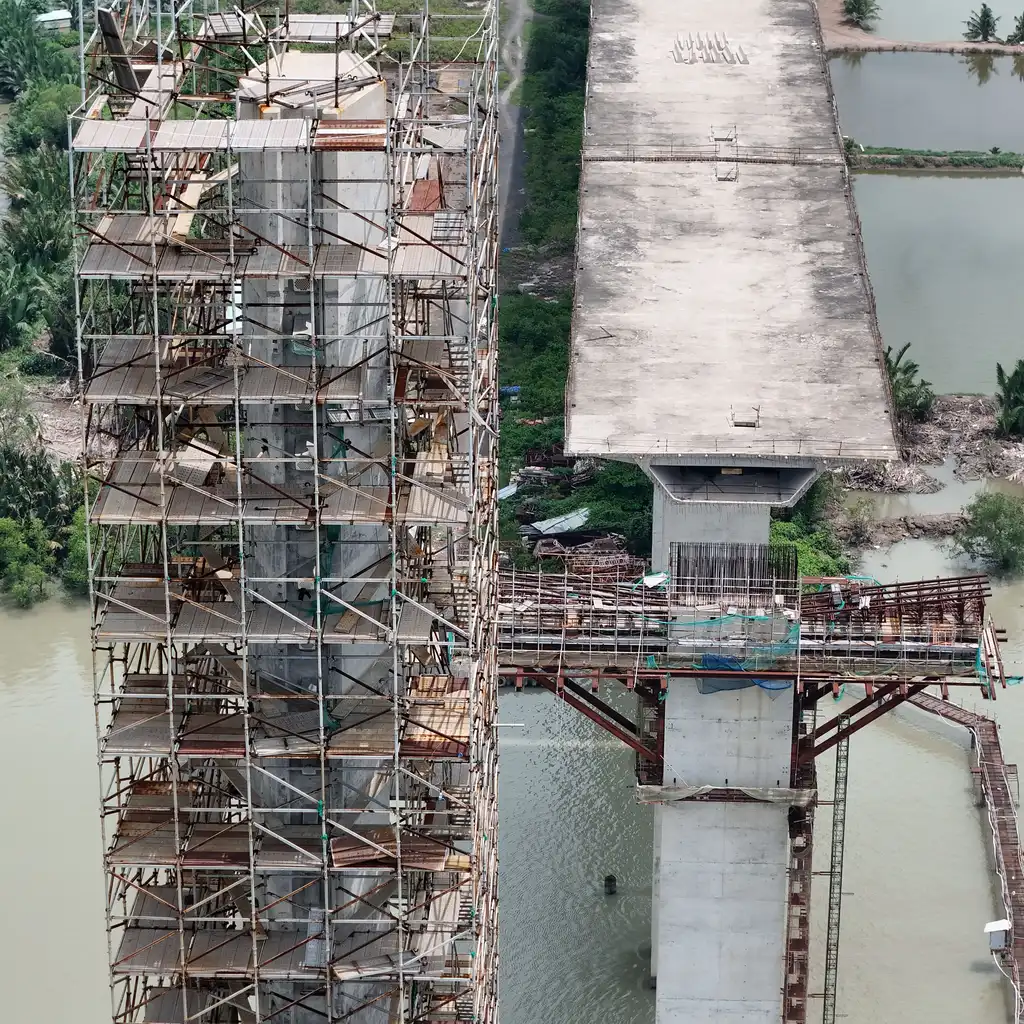
You build or rehabilitate highway, rail or pedestrian spans, with duties that may include foundations, girder lifts and temporary supports. Where a road or channel stays open, a dropped load can affect travelers as well as your crew and the unfinished bridge.
The Southern Agency can review your specific bridge-building operations, including your lift plans and falsework designs, to help select appropriate insurance. We can help you identify which coverage protects your equipment and crews during risky maneuvers and how to align your policies with the insurance requirements set by public owners.
Setting girders and segments with large cranes creates overturn and dropped-load exposure with catastrophic potential.
Temporary supports for decks and spans can fail under load, endangering crews and the structure under construction.
Crews working on piers, decks, and steel at height face serious fall exposure throughout bridge construction.
Keeping roads, rail, or water open beneath a worksite exposes the traveling public to dropped material and incidents.
Building piers and spans over rivers and channels adds drowning, vessel, and pollution exposure to the project.
A bridge under construction is exposed to collapse, storm, and flood loss before it is finished and accepted.
A public contract may require performance or payment bonds and specific limits. Check actual bid, award and ongoing obligations; satisfying a contract condition does not make every defect or delay insured.
Policies to ask about. Which ones fit depends on your operations, your contracts, and the carrier’s forms.
These hypothetical examples are not agency claim results. Whether a loss is covered depends on the facts, policy terms, and applicable exclusions.
Hypothetical: during a beam set above an open road, a load shifts and damages property below. General liability may address covered third-party damage. Damage to the girder, crane or bridge work needs separate review, along with the crane-hire agreement and responsibility for the lift.
Hypothetical: temporary supports give way before a deck pour and damage the unfinished structure. Builders risk may address covered damage to insured project property. Check temporary works, faulty-work and collapse provisions and each party's insured interest rather than assuming the same terms pay both to correct a support and repair resulting damage.
Hypothetical: equipment over water releases fuel into the river and triggers a cleanup demand. A pollution policy may address a covered release. Identify whether the source is a vessel, land equipment or cargo and review the corresponding terms; an environmental policy name alone does not confirm every marine release.
Start with the work you do and the questions your current policies leave unanswered. Carrier options depend on your location, risk, and underwriting. Explore our approach.
Compare liability for public injury or damage, actual crew benefits, road vehicles, equipment and bridge property separately. Waterway releases, engineering duties and public-owner bond requests need their own review. The mix depends on actual operations and contract obligations; a policy list or certificate does not confirm every lift, worker or design duty is insured.
Builders risk may help protect work in progress against collapse, storm, and flood loss before completion, subject to policy terms and flood or named-storm provisions.
Read the actual public bid and contract, obligee and timing for performance, payment or bid requirements. Performance and eligible supplier or subcontractor payment are different bonded obligations, subject to approval and capacity review. They are not the contractor's accident insurance, and indemnity can require reimbursement to the surety.
Over-water work raises drowning, vessel, and pollution exposure that may need specific terms or endorsements. Coverage availability depends on underwriting and how the operations are described.
Maintaining traffic beneath active work increases third-party exposure. General liability may respond to covered incidents, depending on policy terms, traffic-control practices, and the facts.
Pricing commonly reflects span types, crane and falsework use, over-water work, payroll, bonding, equipment, and claims history. A tailored quote reflects how your specific operation works.
Bring your questions, current policies, and relevant contracts. An agent can review coverage terms, exclusions, and the information carriers ask for, then explain the options available to you.